
Classes Soon Back in Session at One-Room Howard Schoolhouse
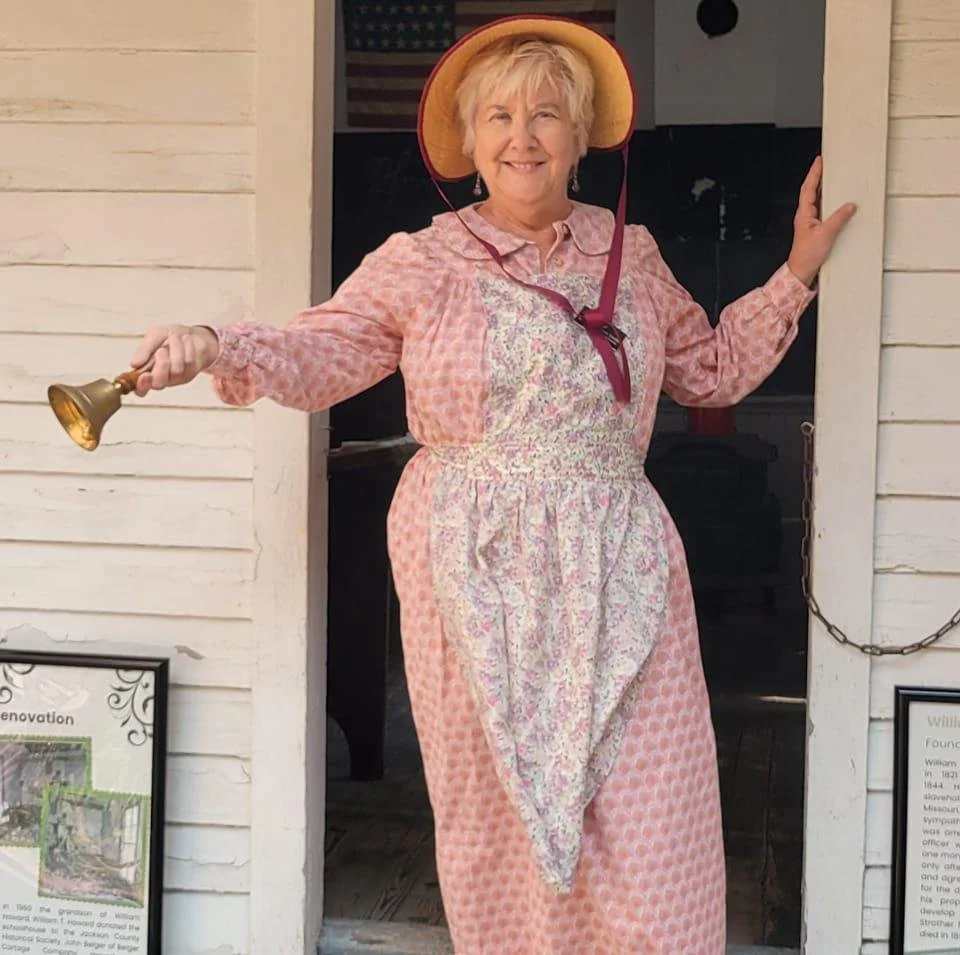
Gloria Smith, Jackson County Historical Society president, who raised much of the needed funds for the schoolhouse restoration, looks forward to the return of Independence School District first-graders who for years have made annual field trips to the schoolhouse. This photo was taken before the schoolhouse’s recent restoration. Photo courtesy of the Jackson County Historical Society.
It’s June, and school is out - but not in the courtyard of the 1859 Jail Museum in Independence.
The restoration of the historic one-room Howard Schoolhouse is close to being complete, and the building soon will be reopened for visitors, especially children.
A ribbon-cutting ceremony has been scheduled this summer in the courtyard of the historic jail at 217 N. Main St.
“I am thrilled and excited to have it restored, especially for the children who will come and visit,” said Gloria Smith, the Jackson County Historical Society president who directed the project and secured much of its funding.
“It’s such a treasure, and it’s been worth all of the time and effort to bring it back to life.”
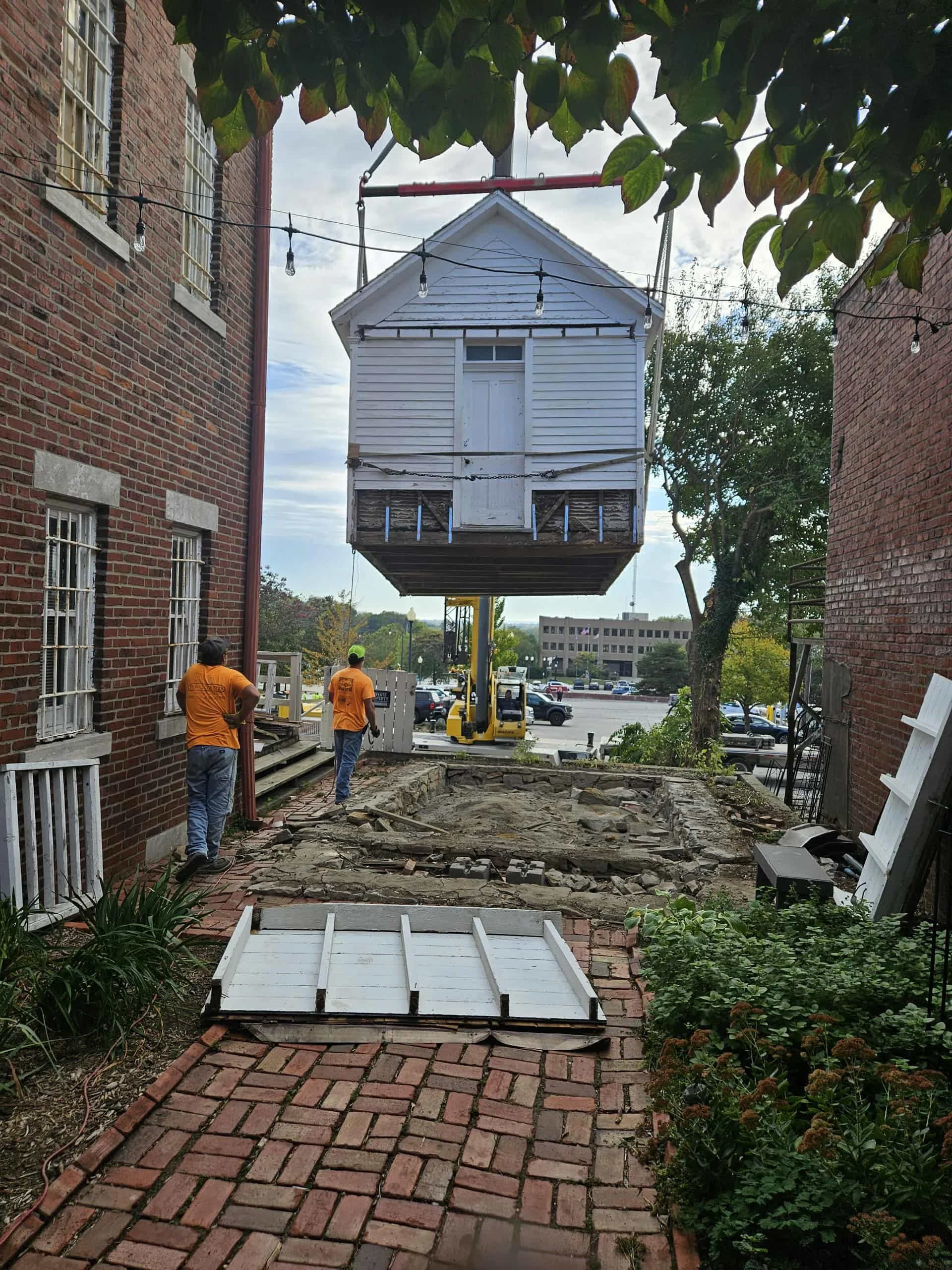
Last fall an area crane crew lifted the schoolhouse off its foundation and placed it in a parking lot just behind the 1859 Jail Museum in Independence. Work then began on a new foundation. Photo courtesy of the Jackson County Historical Society.
The project, which has taken close to nine months to complete, was prompted by foundation issues, as historical staff members and volunteers began to notice how the schoolhouse floorboards seemed to shift beneath them. They also recognized that the floor at the front of the building was five inches higher than the floor at the back.
Out of an abundance of caution, the society restricted visitor entry inside the schoolhouse in the fall of 2024.
The society’s board then hired Greg Springer of Springer Building Co. of Blue Springs to assess the problem and make recommendations. He decided the best way to repair the foundation was to take the schoolhouse off its existing foundation and build a new one.
In order to accomplish Springer announced the schoolhouse was “going to fly,” and fly it did.
Stabilizing the wooden frontier schoolhouse with a series of interior braces, Springer, working with a crane crew, last October lifted the approximately 10,000-pound structure off the foundation before easing it back down onto the society’s parking lot just to the east.
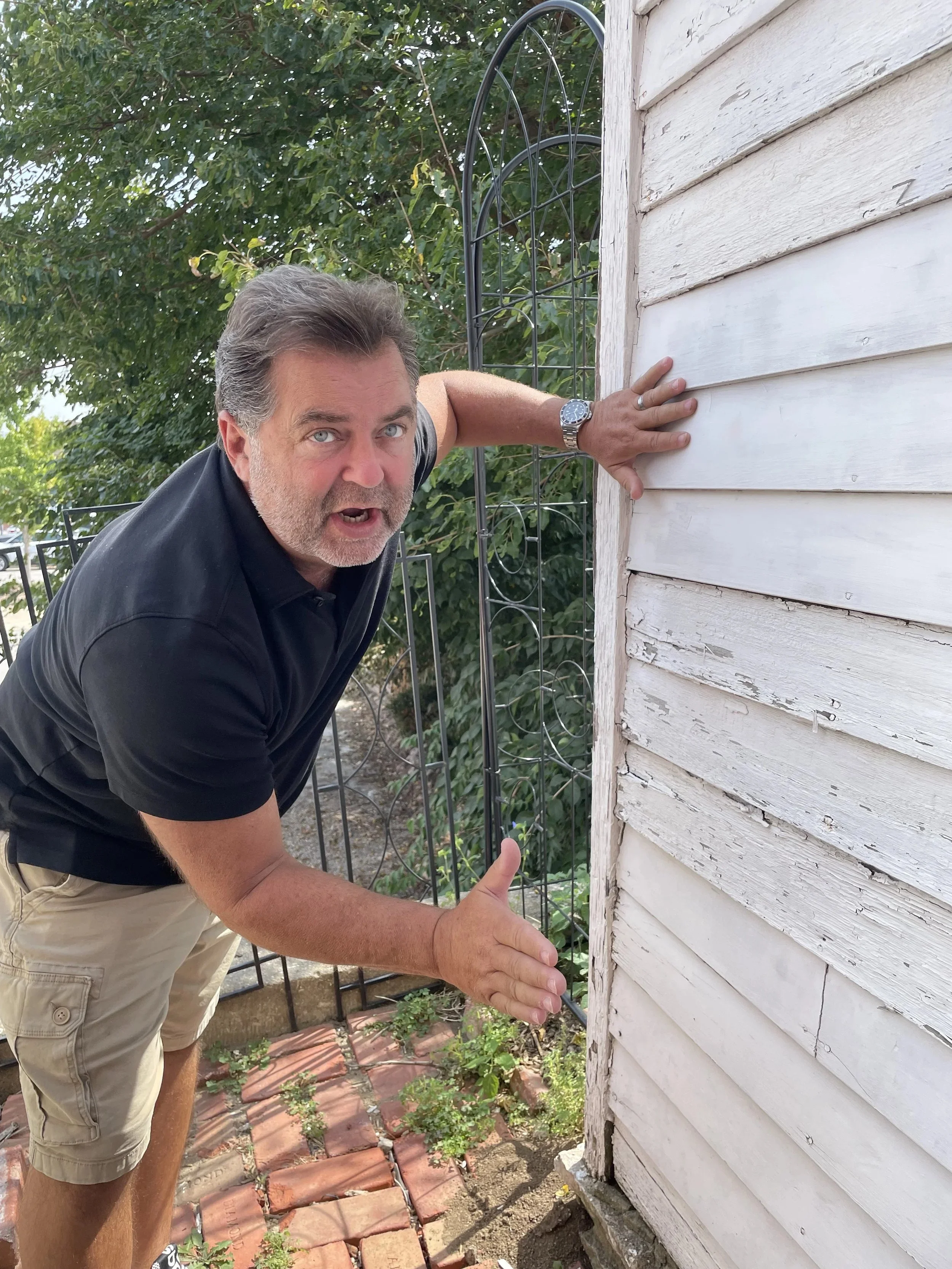
Greg Springer of Springer Building Co. of Blue Springs directed the restoration. Photo courtesy of the Jackson County Historical Society.
The unusual sight attracted Kansas City television news crews, one of which called in the station’s helicopter for a flyby.
Work then commenced.
Springer described the old foundation as consisting of old rock and mortar, which had to be removed. After that was hauled away, he constructed a new foundation and then brought the crane crew back to lift the schoolhouse up and place it back where it had stood originally.
Other work, done by local contractors or volunteers, followed.
Exterior restoration work included installing and painting new siding and trim, and also building a new front porch.
Interior work included a repainted chalkboard, a refinished wooden floor as well as re-plastered and re-painted walls.
Historical society board member Larry Smith, with his father-in-law Bob Beeman, donated their time and expertise to build and install two new oak windows.
Fellow society board member Jason Wade, working with JCHS volunteer Ian Clark, unearthed and made uniform bricks long in place in front of the schoolhouse.
Meanwhile, the historical society board approved the appropriation for a new white picket fence to be installed by Guier Fence Co. of Blue Springs. Raymond Brown, Guier general manager, offered to install the fence at a discounted rate after learning of the schoolhouse’s unique educational legacy in eastern Jackson County.
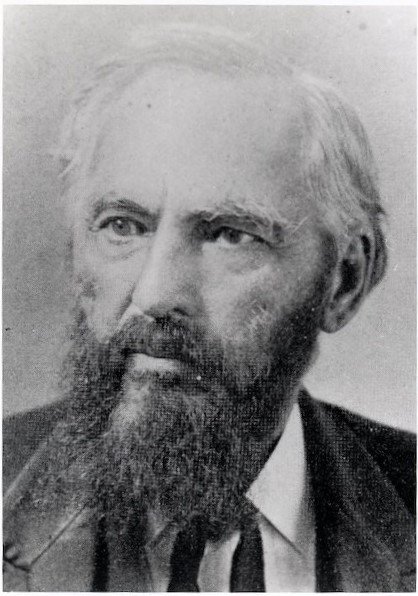
William Bullitt Howard, a Kentucky native who today is considered the founder of Lee’s Summit, built the schoolhouse for his children in around 1870 - or perhaps years before that. Research into the time of its construction continues. Photo courtesy of the Jackson County Historical Society.
Smith estimated the entire cost of the schoolhouse restoration project to be more than $85,000.
In early June, the society needed approximately $1,200 to meet the budget for the projects. Smith anticipates that additional funds will be raised for more exterior work, which will include the installation of trim on the new windows.
“We undertook this project to save the schoolhouse from serious deterioration and to restore it to a condition that will allow future generations to experience what schools were like in the 19th century,” Smith said.
“During their schoolhouse tours, the children sit on hard benches, write on slate boards, and read from McGuffey Readers. They are amazed by the differences in our classroom from their own classrooms, and are wide-eyed in disbelief when they learn we have no electricity, heating, air conditioning or computers.
“The historical society’s stated mission is to educate and preserve local history, and we believe the restoration of the Howard Schoolhouse fulfills that mission.”
The schoolhouse’s first students
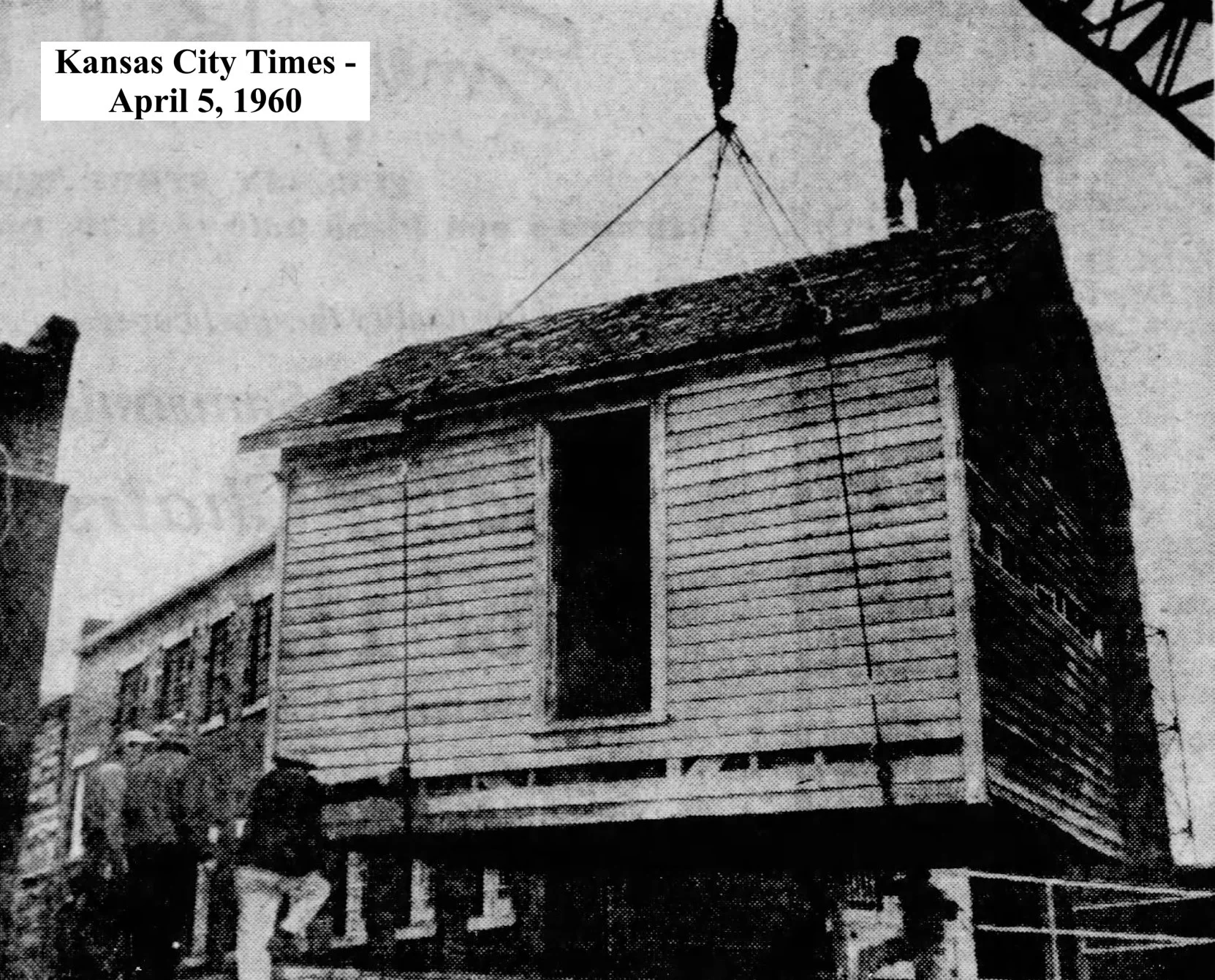
In the spring of 1960, a concrete company crane crew placed the schoolhouse on its new foundation in the 1859 Jail Museum courtyard. Photo courtesy of the Kansas City Star.
The historical society has owned and operated the schoolhouse since 1960.
The previous year, William T. Howard, a grandson of William Bullitt Howard, a 19th-century settler from Kentucky who today is considered the founder of Lee’s Summit, donated it to the organization.
The earlier Howard had come to Jackson County in 1844 and acquired hundreds of acres.
Ten years later, he and his wife, Maria Strother Howard, built a two-story Greek revival home, which stood for more than a century southwest of what is today the intersection of Interstate 470 and Woods Chapel Road.
The home was completed just when the “troubles” began.
Pro-slavery residents of western Missouri soon began clashing with anti-slavery “free staters” who had begun to arrive in eastern Kansas.
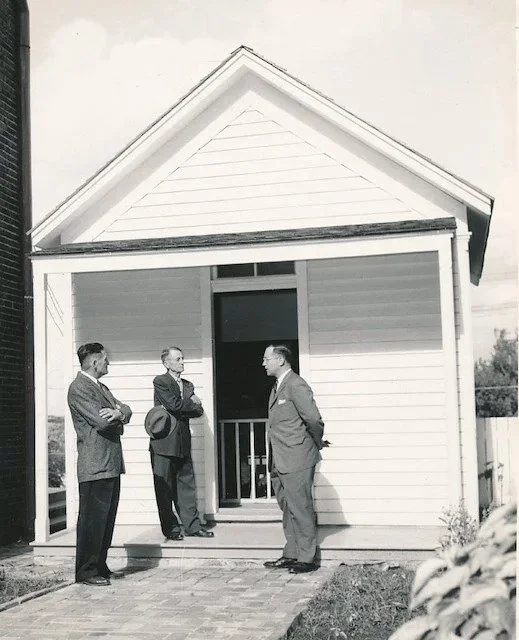
After the historical society restored the schoolhouse, it opened to the public following its 1960 dedication. Here JCHS President Howard Adams (right) stands with Howard family members William Bullitt Howard, Jr. and William T. Howard. JCHS image No. PHL 23073.
This period of bitterness and retribution, on both sides of the Missouri-Kansas line, began well before the Civil War did in 1861.
Howard himself owned approximately 12 enslaved persons during this time, according to recent research published in the Kansas City Star.
In 1862, a Union Army officer arrested Howard, who spent a month in the recently-completed jail in Independence - today’s 1859 Jail Museum - before being released after posting a $25,000 bond and promising to move back to Kentucky.
Maria died during their exile. After the Civil War’s end, Howard returned to Jackson County and established a small community he named Strother, in honor of his late wife. That district today comprises much of downtown Lee’s Summit.
Howard soon married area school teacher Mary Catherine Jones. Together, they had six children, the first born in 1868.
Much of the evidence held by historical society researchers suggests the schoolhouse was built for these children, and was completed in or around 1870. Recent research, however, suggests the schoolhouse may have been built earlier, given that Howard and his first wife Maria, had three children of their own, born between 1846 and 1849.
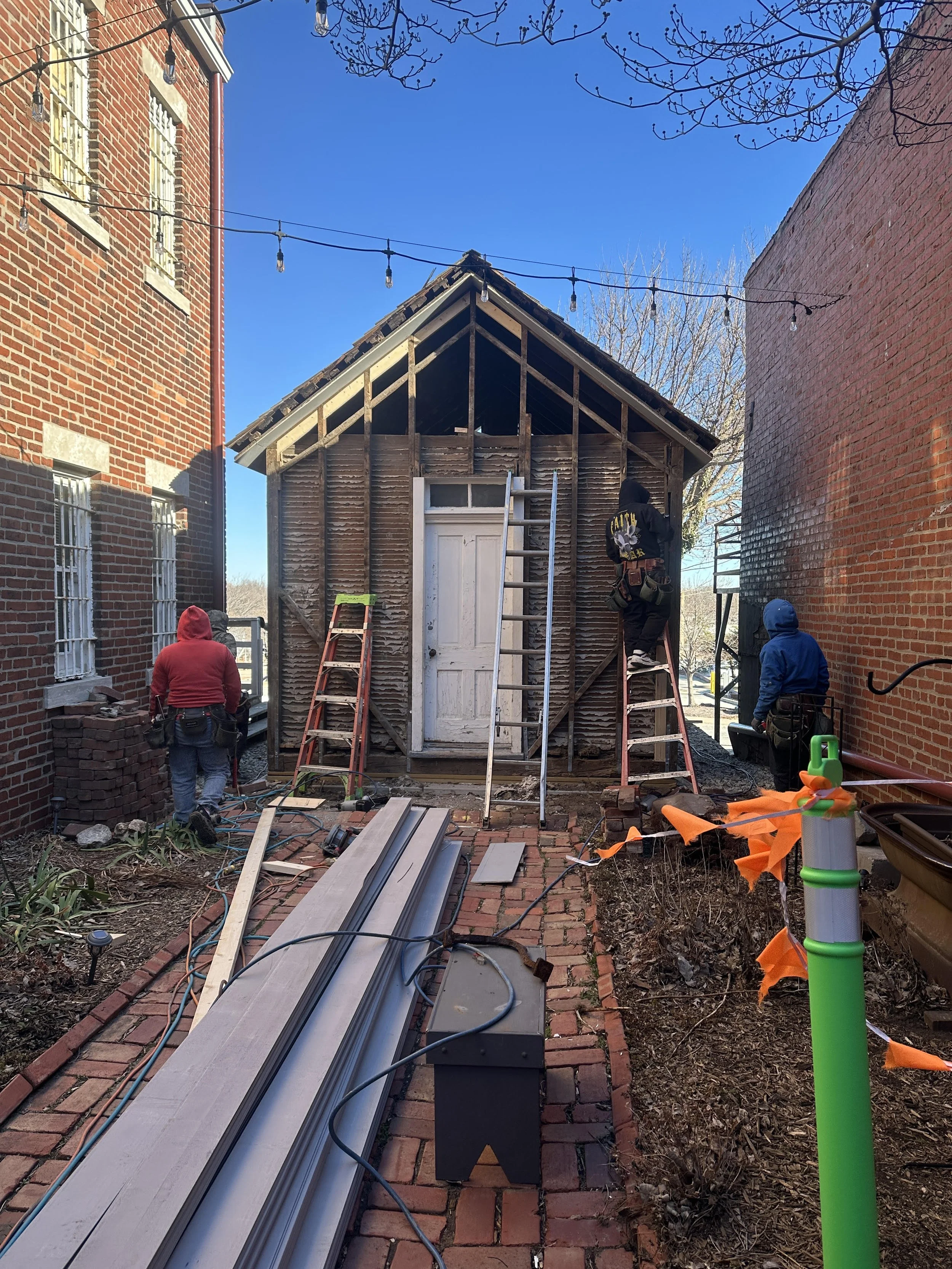
Work continued on the schoolhouse continued through the winter and spring. Photo courtesy of the Jackson County Historical Society.
While two of them, sons Williams, Jr. and John, died as small children, a daughter, Anna, born in 1848, lived to adulthood.
However old the schoolhouse is, in 1959, an area concrete company crew placed it atop its original Independence foundation.
Historical society members then restored the structure before opening it to visitors in June, 1960.
There, it received visitors for decades until the foundation issues prompted its closing.
Donors step up
The restoration would not have been possible without many generous donors.
They included Smith and her husband, R. Scott Smith, who contributed $15,000.
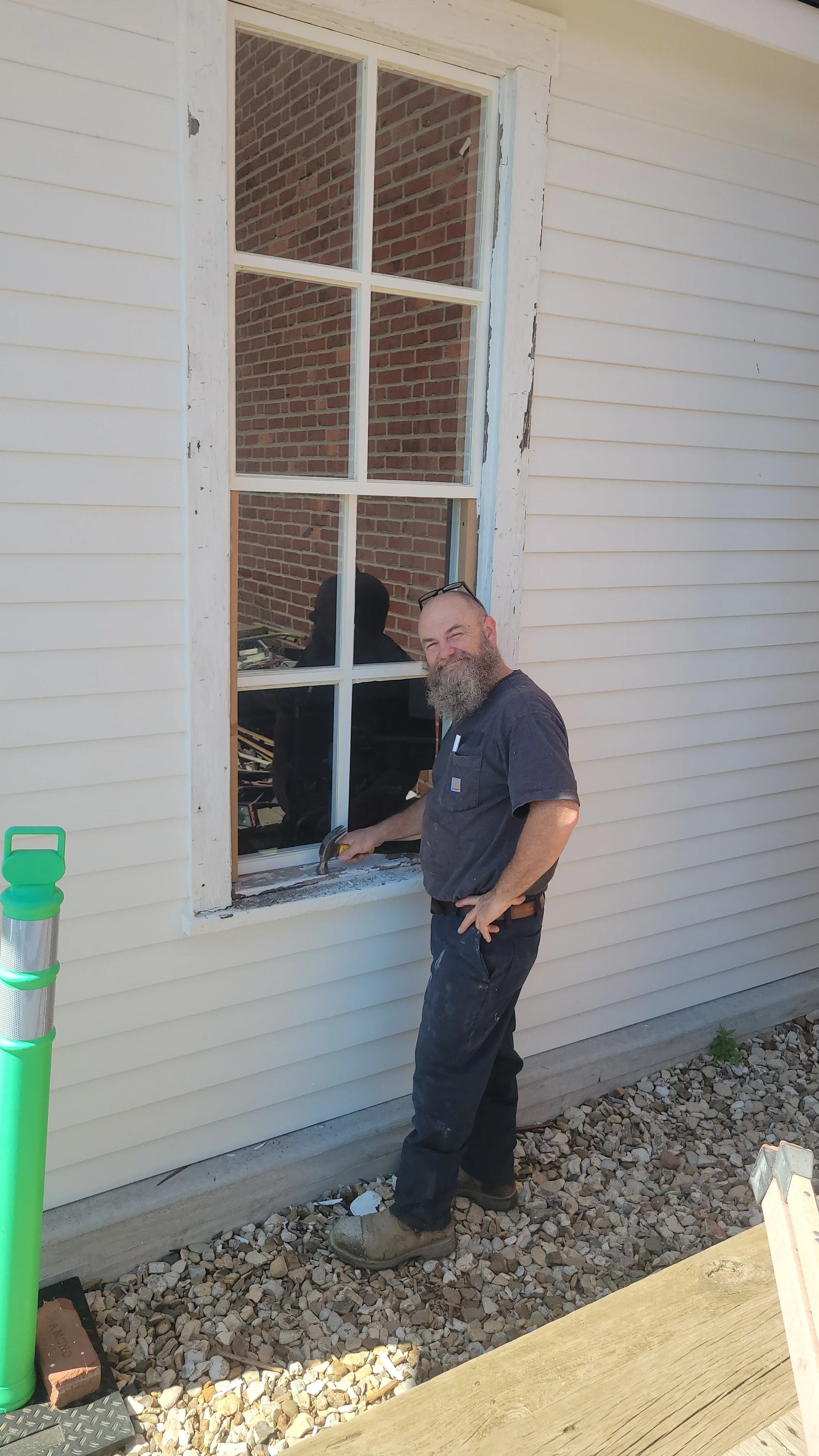
Jackson County Historical Society board member Larry Smith, with his father-in-law Bob Beeman, built and installed two new oak windows for the schoolhouse. Photo courtesy of the Jackson County Historical Society.
Other gifts included $12,500 from the William T. Kemper II Charitable Trust-Commerce Trust, $6,000 from Melanie Moentmann and her employer, SS&C Technologies, and $3,000 from Greg and Natalie Springer.
Jackson County Historical Society members donated amounts ranging from $50 to $1,000.
The fund was well short of its goal last fall, but JCHS received money to start the restoration project from an unexpected source.
Last September, James M. “Mike” Shaw, president of the West-Central Missouri Genealogical Society in Warrensburg, Mo., presented a $15,000 check to Smith for the schoolhouse’s restoration.
The money represented a portion of the remaining funds of that society, which had served a 10-county area in Missouri since 1968 but whose officers, Shaw said, recently decided to disband the organization because of declining membership.
All of these contributions will help to keep the Howard Schoolhouse, one of the estimated 400 schoolhouses still standing across the country and serving in various educational and cultural roles, ready for visitors.
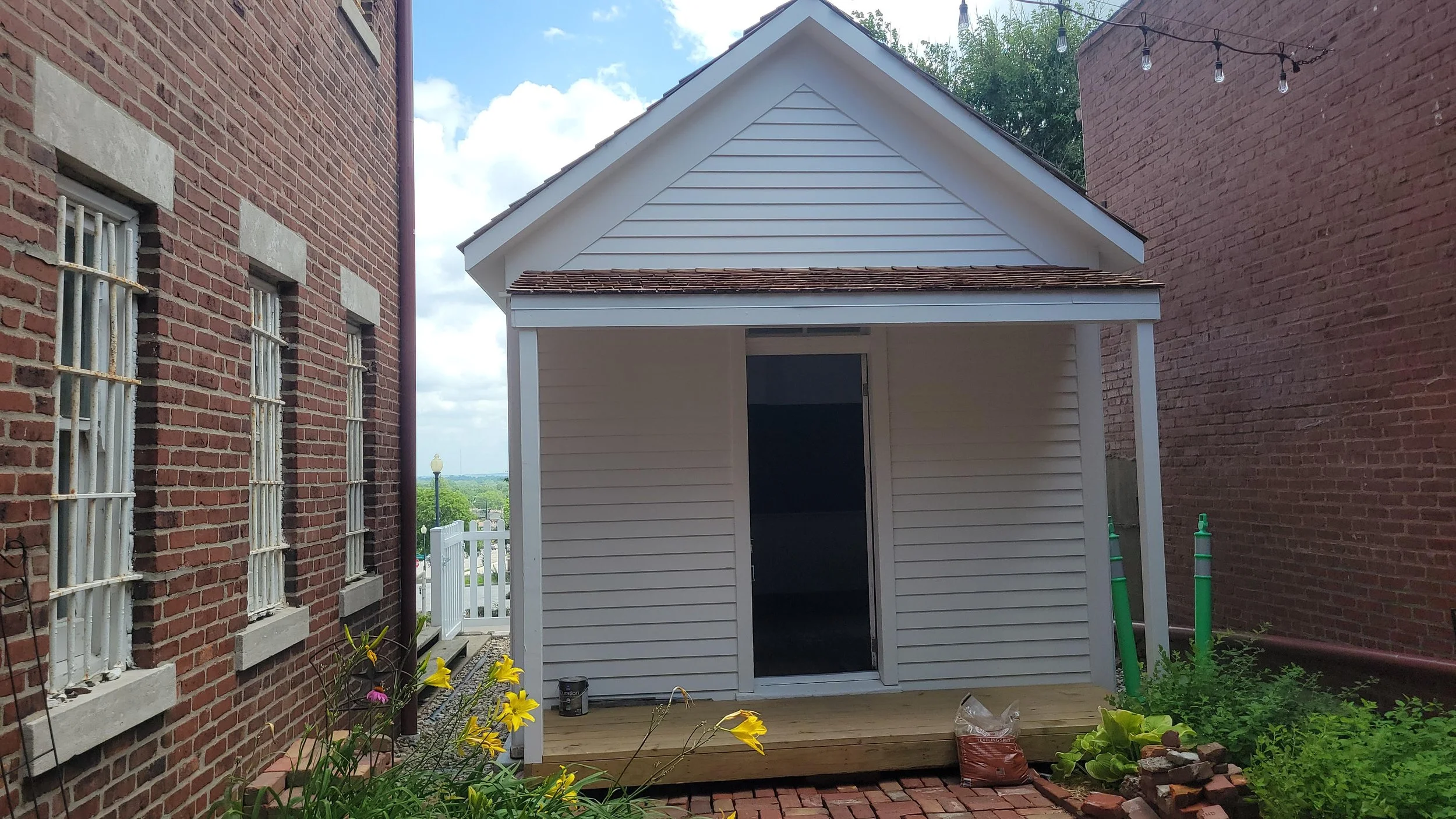
Many volunteers and donors made the restored Howard Schoolhouse a reality, including Guier Fence Co. of Blue Springs, which installed a new white picket fence on the building’s east side at a reduced cost because of the schoolhouse’s unique educational legacy in eastern Jackson County. Photo courtesy of the Jackson County Historical Society.
Those will include first-graders enrolled in the Independence School District who have been making annual visits to the schoolhouse, along with the 1859 Jail Museum, for many years.
Still other children routinely visit with their parents, or while participating in tours organized by other schools or school districts.
Meanwhile, the project continues to benefit from the generosity of donors.
The historical society recently received a $3,500 gift from Steve and Marianne Noll that will fund the installation of a series of historical markers telling the schoolhouse’s story.
That story will be, as Smith likes to say, all about “our ‘brand new’ 1870 schoolhouse.”

Brian Burnes is a former president of the Jackson County Historical Society.