
Lives Well Lived
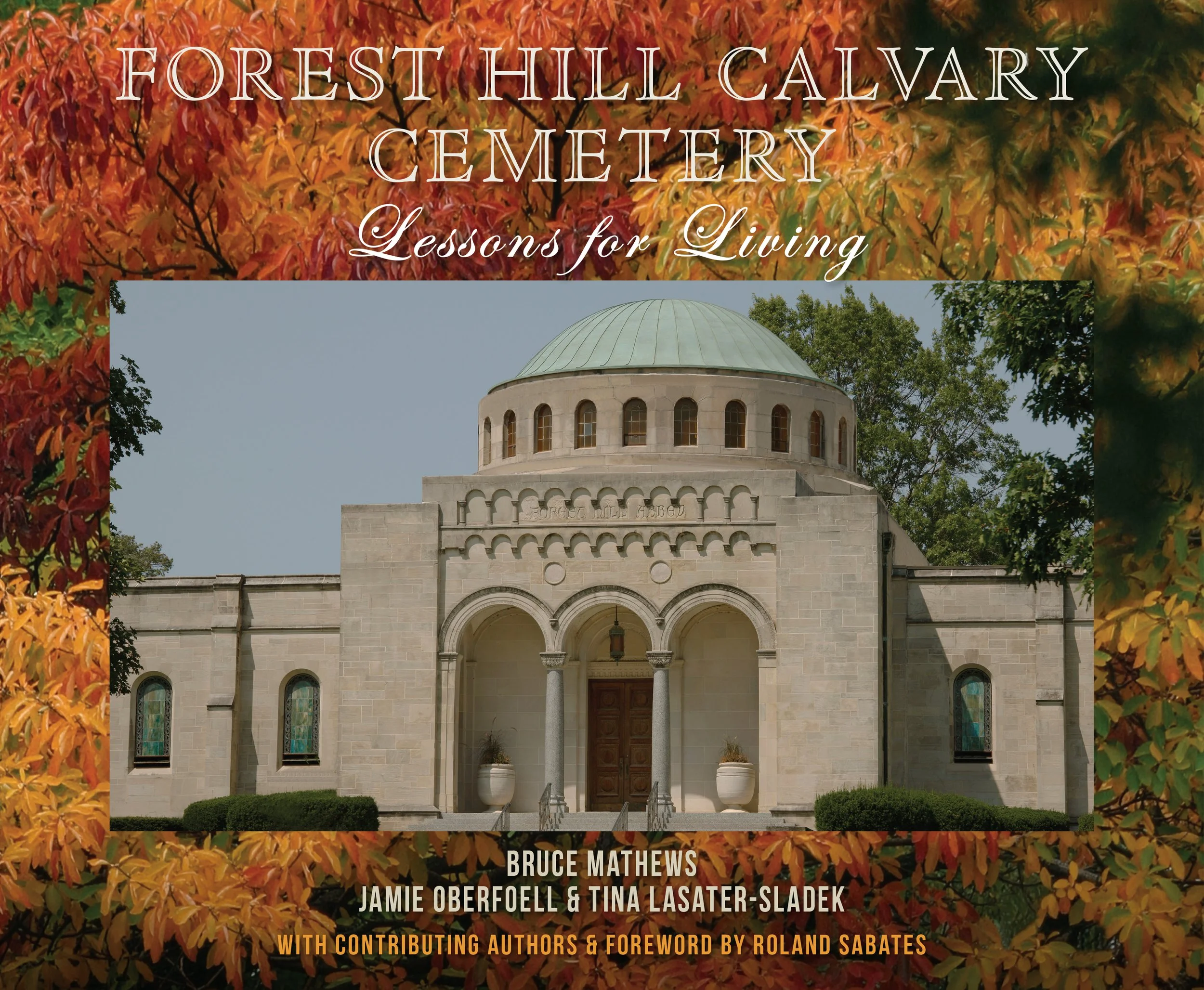
“Forest Hill Calvary Cemetery: Lessons for Living,” by Bruce Mathews, has just been published. Photo courtesy of Bruce Mathews.
BY BRIAN BURNES
It’s not about death.
It’s about life - or, rather, past lives.
Bruce Mathews, a longtime Kansas City area photographer, has included pictures depicting all four seasons in his new book, like this autumnal scene. “Spring flowers offer hope,” Mathews says. “While under a canopy of autumn leaves, our thoughts can turn to reflection.” Photo courtesy of Bruce Mathews.
Bruce Mathews, longtime Kansas City area photographer and historian, has published his fourth book on Jackson County cemeteries.
They include Elmwood, Union, Mount Washington cemeteries, and now, Forest Hill Calvary.

Forest Hill Calvary Cemetery. Photo courtesy of Bruce Mathews.
These comprehensive volumes (this one includes 368 pages) include photos of monuments and mausoleums (architectural treasures in their own right), artfully arranged among images of all four Kansas City seasons at their most photogenic.
In Forest Hill Calvary, that includes memorials for the Kansas City Monarchs’ player and manager John “Buck” O’Neil and also Leroy “Satchel” Paige, whose whimsical monument attracts admirers, some of whom leave baseballs for the legendary Negro Leagues pitcher.
But the reader also encounters archival portraits of the people who - in Mathews’ belief - made the Kansas City area better for those of us who have followed afterward.
His latest cemetery book, “Forest Hill Calvary Cemetery: Lessons for Living,” like his others, is a browser’s delight.
Mathews - in collaboration with Jamie Oberfoell, the cemetery’s owner, and Tina Laseter-Sladek, cemetery archivist and family service counselor - published the book.
He wrote a number of the individual features devoted to those interred there, while many more were the work of 67 of his closest friends, serving as contributing authors.
Many of the contributing authors are descendants of those whose stories they have shared.
One example: Kansas City area golf champion Tom Watson, who teamed up with Mathews to write about his grandfather, Raymond E. Watson, Sr., who died in a 1930 plane crash when he and a group of friends were returning from a south Texas fishing trip. He was only 39 years old.
Carmaletta Williams, executive director of the Black Archives of Mid-America, wrote about Horace Peterson, who died while he and his sons were playing in the Swope Park lagoon with a small sailboat. When the boat got trapped in some vegetation, he went to retrieve it, got tangled up himself, and drowned.
Ollie Gates, patriarch of Gates BBQ, wrote about Arrington Bubble Klice, Gateway Boxing Club owner and longtime Golden Gloves Association of America volunteer who mentored hundreds of at-risk young men.
Pat O’Neill, longtime historian of the Kansas City Irish community, wrote about Tom Pendergast, operator of the notorious Pendergast political machine.
Mark McHenry, former director of the Kansas City Parks and Recreation Department, wrote about the father-son team of Sid J. Hare and S. Herbert Hare. For decades, they operated Hare & Hare, the Kansas City landscape architecture and urban planning firm that designed, among other projects, the grounds of the Nelson-Atkins Museum of Art.
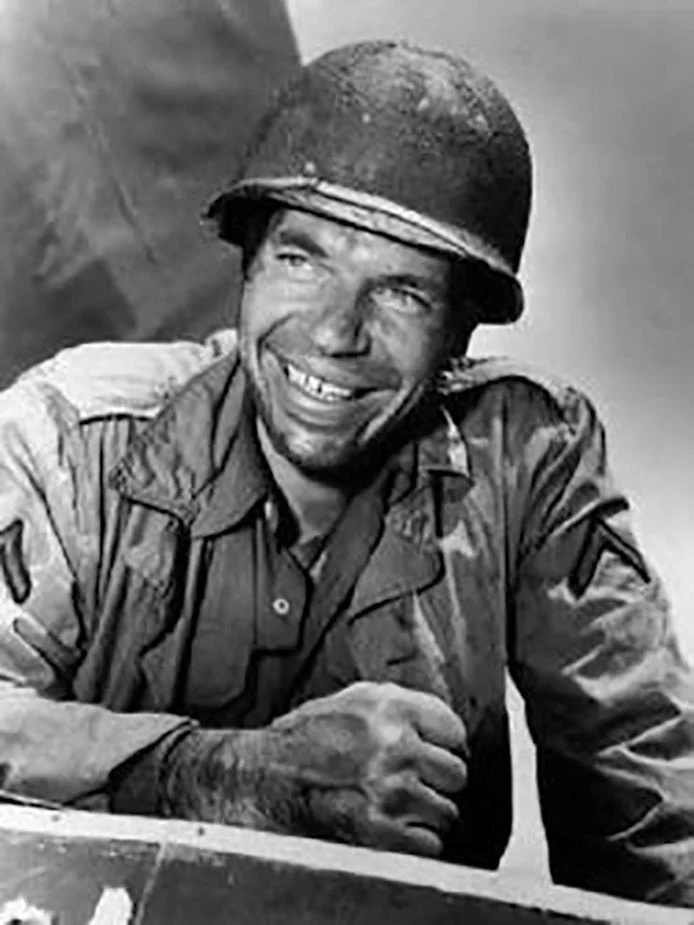
Richard “Dick” Peabody, a Kansas City native, worked for years as a Hollywood character actor. Photo courtesy of Find A Grave.
Some individuals may surprise readers.
There is Richard “Dick” Peabody, a Kansas City native and University of Kansas communications graduate who became a veteran Hollywood character actor, who may be most remembered as “Private Littlejohn” in the 1960s television World War II drama series “Combat!” He was also a grandson of Robert Gillham, designer of Kansas City’s cable railway system in the late 19th century.
Who knew?
Bruce Mathews, who wrote the vignette, did.
Sometimes the photographs featured were taken by the celebrated Kansas City Strauss Peyton studio. Founded in the early 1900s, it was known for its portraits of entertainers such as Charlie Chaplin, Fred Astaire, and the Marx Brothers, but also for the photos of Kansas City area families and individuals, many of them prominent. In 2016, Mathews began his multi-year project of scanning and editing the thousands of the collection’s fragile glass plate negatives, initially saved from the trash bin by the Jackson County Historical Society in 1969.
To learn more about Mathews’ work with the collection, go to jchs.org
Proceeds generated by his new book will be directed to the 501(c)3 nonprofit entity, the Forest Hill Cavalry Cemetery Historical Society.
Donations were used to cover the book’s printing costs. Additional donations and book sales will be directed toward the preservation of the large “Pantheon” and “Abbey” mausoleums located in the cemetery.
Mathews published his first cemetery book, about Elmwood Cemetery, in 2010. Four years later, he compiled a book about Union Cemetery, followed in 2020 with a volume devoted to Mount Washington Cemetery.
Beyond those books, Mathews published “The Kansas City Spirit: Stories of Service Above Self “ in 2012, and “Windows of Kansas City As Art, History And Inspiration” in 2014. The same year, he and Steve Noll published “Kansas City: Our Collective Memories.”
In 2024, in conjunction with Stephen Mitchell, Mathews published “Janssen Place: A Unique Kansas City Neighborhood: Still on Parade After 125 Years,” detailing the 19 pre-World War I mansions in the Hyde Park district built by Kansas City railroad entrepreneur Arthur Stilwell.
Twice, Mathews has received the George Ehrlich Award, the honor given by Historic Kansas City and named for the noted Kansas City architectural historian. He has also been honored six times by the Jackson County Historical Society with its Book of the Year award.
“Walking through the cemeteries and reading the inscriptions on the grave memorials can be thought-provoking, comforting, and, sometimes, even humorous,” Mathews said.
“One cannot help but have their spirits uplifted by getting to know about those who came before us.”
At 6 p.m. Wednesday, May 27, Mathews will deliver a presentation about his new book at the Linda Hall Library, 5109 Cherry St., in Kansas City. Joining him will be cemetery owner Jamie Oberfoell and several contributing authors. As of mid-May, program reservations were close to capacity. For more information, go to lindahall.org/experience/events.
INTERVIEW
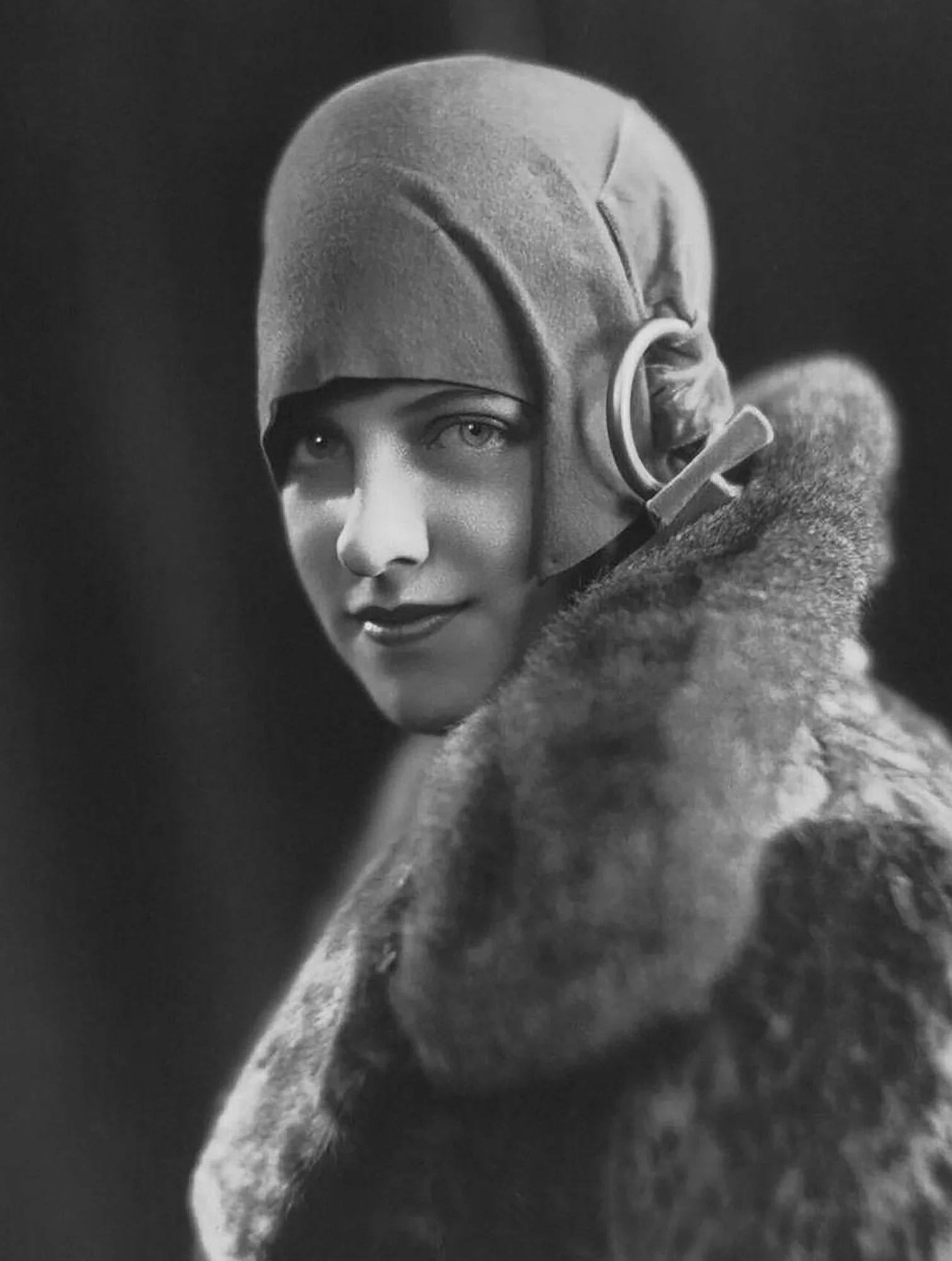
Miriam Burns Horn won the 1927 U.S. Women’s Amateur Golf Championship.
Strauss Peyton photo; source, Milburn Country Club, gifted by John Garrity).
Q: In 2025, you were among those who confirmed the location of the unmarked grave of Miriam Burns Horn Tyson of Kansas City, who in 1927 won the U.S. Women’s Amateur Golf Championship, and then purchased and placed a monument on the site. That group included local golfing great Tom Watson, veteran sportswriter John Garrity, and others. Why had the grave been left unmarked?
A: When Miriam died in 1951, her parents had already preceded her. There were no other relatives who stepped forward to ensure she had a proper burial. Her body had been cremated, with her remains buried without a gravestone. Her death certificate did not even identify the cemetery. It turned out that her unmarked grave was right where it should have been, in the Burns family lot at Forest Hill. Her father, Clinton Sumner Burns, who had passed away in 1924, was the co-founder of Burns & McDonnell engineers.
Q: Your cemetery books often emphasize the beauty of the surroundings, often by capturing the splendor of the changing seasons. Do you believe we should not think of cemeteries as gloomy sites of sadness but as places of beauty and repose that we should actively seek out?

A committee located the unmarked grave of Miriam Burns Horn Tyson and placed a memorial there on May 30, 2025. Photo courtesy of Bryan Fairbanks, Burns & McDonnell.
A: In spring, our thoughts turn to new beginnings. In the winter, when the cemetery grounds may be covered in a fresh blanket of snow, they can evoke the most peaceful feeling in the world. Spring flowers offer hope. While under a canopy of autumn leaves, our thoughts can turn to reflection. I have found that there is no bad time to photograph an old cemetery.
Cemeteries do not have to be gloomy places at all. Any gloom or sadness occurs when a cemetery is not maintained. It takes on an aura of neglect that comes from the lack of stewardship by those responsible for its care. But with care, a cemetery can become a place of hope and natural beauty, inviting visitors to return again and again to enjoy peace and serenity.
Q: What challenges do cemetery operators face today?
A: Forest Hill Calvary Cemetery is much like other large urban cemeteries. Many are more than 100 years old. When they first opened, they were located well outside the city limits. There was nothing near them. It was a day-trip to even visit.
But the growth around the cemeteries today has presented a new set of challenges. Age alone has taken its toll. It has adversely impacted everything man-made, and everything living has had to adapt to the many forces of Mother Nature.

Gilbert Van Zandt, who joined the Union Army as a musician at age 10, first served as a drummer, then later as a courier. Photo courtesy of the State Historical Society of Missouri.
To say that Forest Hill Cavalry Cemetery has been beset with its share of problems over the years would be an understatement. Severe droughts in the 1930s reduced the stock of magnificent trees planted in the 1890s by Forest Hill’s first superintendent, S. J. Hare, and its first general manager, George Law. While the grand and beautiful monuments are architectural treasures, they impose a huge expense for their maintenance. Meanwhile, these issues have increased while the inventory of available grave spaces is reduced each year. Although income revenues are shrinking, operating expenses are increasing.
Also, cemeteries are so vulnerable. They are easy targets for vandals. Bronze mausoleum doors and metal statuary will be stolen, cut up, and sold for scrap.
Fortunately, the outlook for Forest Hill Cavalry Cemetery is not grim. Sharing the stories of the contributions made by many of the people buried there will have a positive impact on the entire community’s attitude toward its existence.
Q: What can we learn by reading about those interred in Forest Hill Cavalry Cemetery, as well as in the other cemeteries you have photographed and written about?
A: All of my books have one common theme: They honor those who came before us and, in their own unique way, were able to contribute to making Kansas City a better place to live. Some of them made mistakes along the way. Who among us hasn’t? The books are an attempt to consider the goodness of the human spirit.
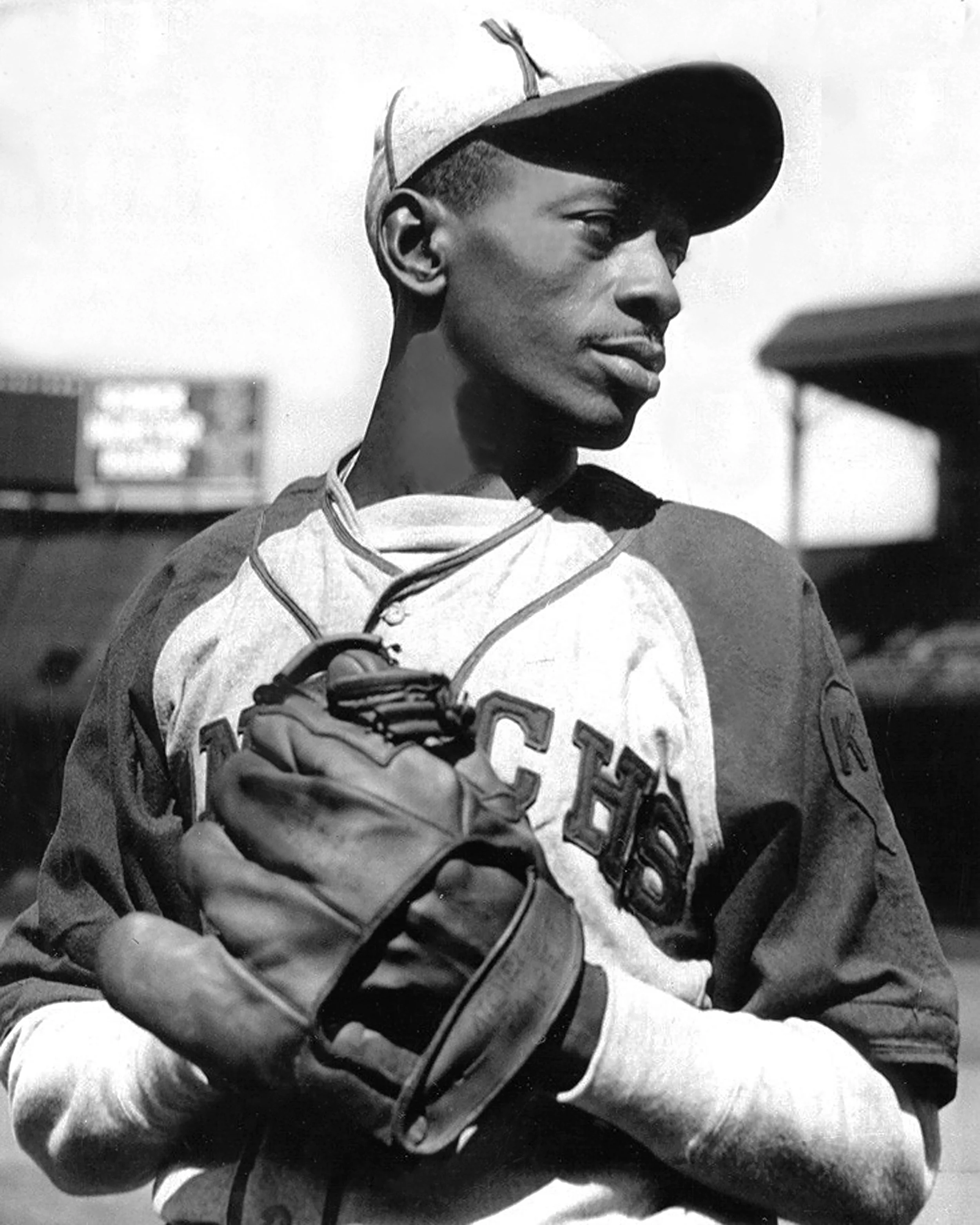
Satchel Paige pitched for the Kansas City Monarchs during the 1940s. Photo courtesy of The Kansas City Star.
We have heard the names of many of these individuals, but often we don’t know much about how they lived, the obstacles they overcame, and what they accomplished. We learn of their sacrifices and how they provided for their families, while also doing their part to create a better city. Their stories are so fascinating that you realize that even the greatest fiction writers could not make this stuff up.
Q: Give me an example.
A: There’s Gilbert Van Zandt. Gilbert enlisted in the Union Army in 1862 at the age of 10 years, seven months, and 16 days. He started as a drummer boy, but by the end of the war, he was serving as a courier in (Gen. William Tecumseh) Sherman’s army during its famous “March to the Sea.”
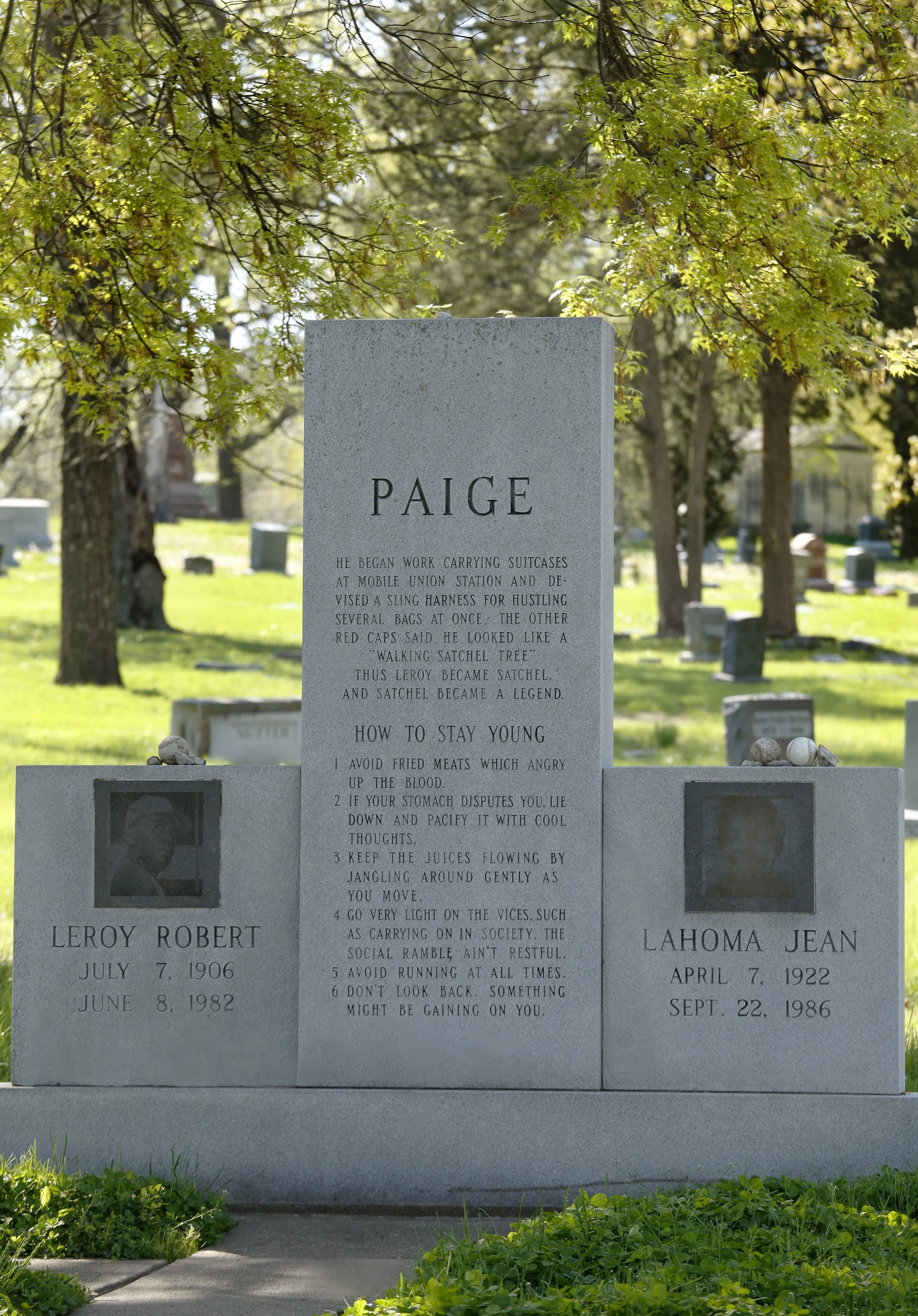
The grave memorial for Satchel Paige and his wife Lahoma includes Paige’s six rules on “How To Stay Young.” Photo courtesy of Bruce Mathews.
Van Zandt’s story can be found in Chapter Six, entitled “Those Who Served.” While it includes other vignettes detailing Union soldiers, there is a long section, written by Kansas City historian Diane Euston, which first appeared in the Martin City Telegraph. It details the efforts to provide an appropriate resting place for the remains of approximately 70 Confederate soldiers who fell during the 1864 Battle of Westport. Those efforts included the installation of a tall monument, built in 1902, near the southeast corner of the cemetery.
This chapter includes a number of stories about the 1864 Battle of Westport, including both Union and Confederate soldiers, as well as women who served as nurses for both sides. There is also an interesting photo of two veterans of the battle who were commanders for each side at the 1925 Battle of Westport reunion. They both died in 1928 and are buried in Forest Hill Calvary Cemetery.
Q: What has publishing these four cemetery books taught you?
A: The first thing that struck me was how differently we view others when they are alive versus getting to know them after they have died. While they are living, we view their actions on a daily basis. Our impressions and emotions can go through many phases.
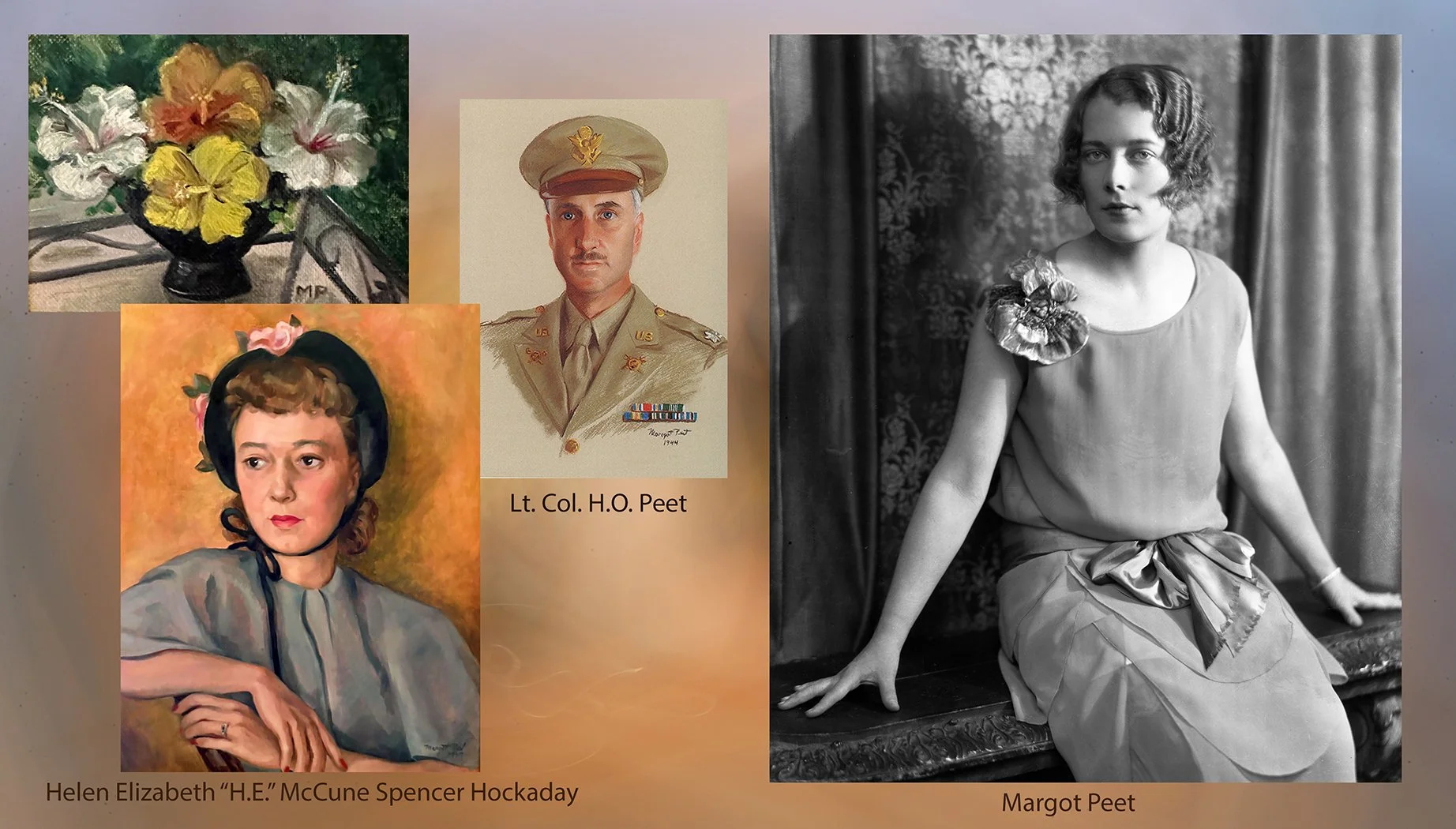
Marguerite “Margot” Munger Peet was a painter and philanthropist. Strauss Peyton photo courtesy of Jackson County Historical Society.
But a great change occurs when we examine their lives after they have departed. Everything begins to even out. We remember them in the totality of their lives’ accomplishments. It often is a clearer glimpse of reality…the beauty of hindsight and history.
Q: Anything else?
A: I have had some unexpected observations.
Observation Number One: Very little, particularly anything of socially redeeming value, has been accomplished without the leadership of women.
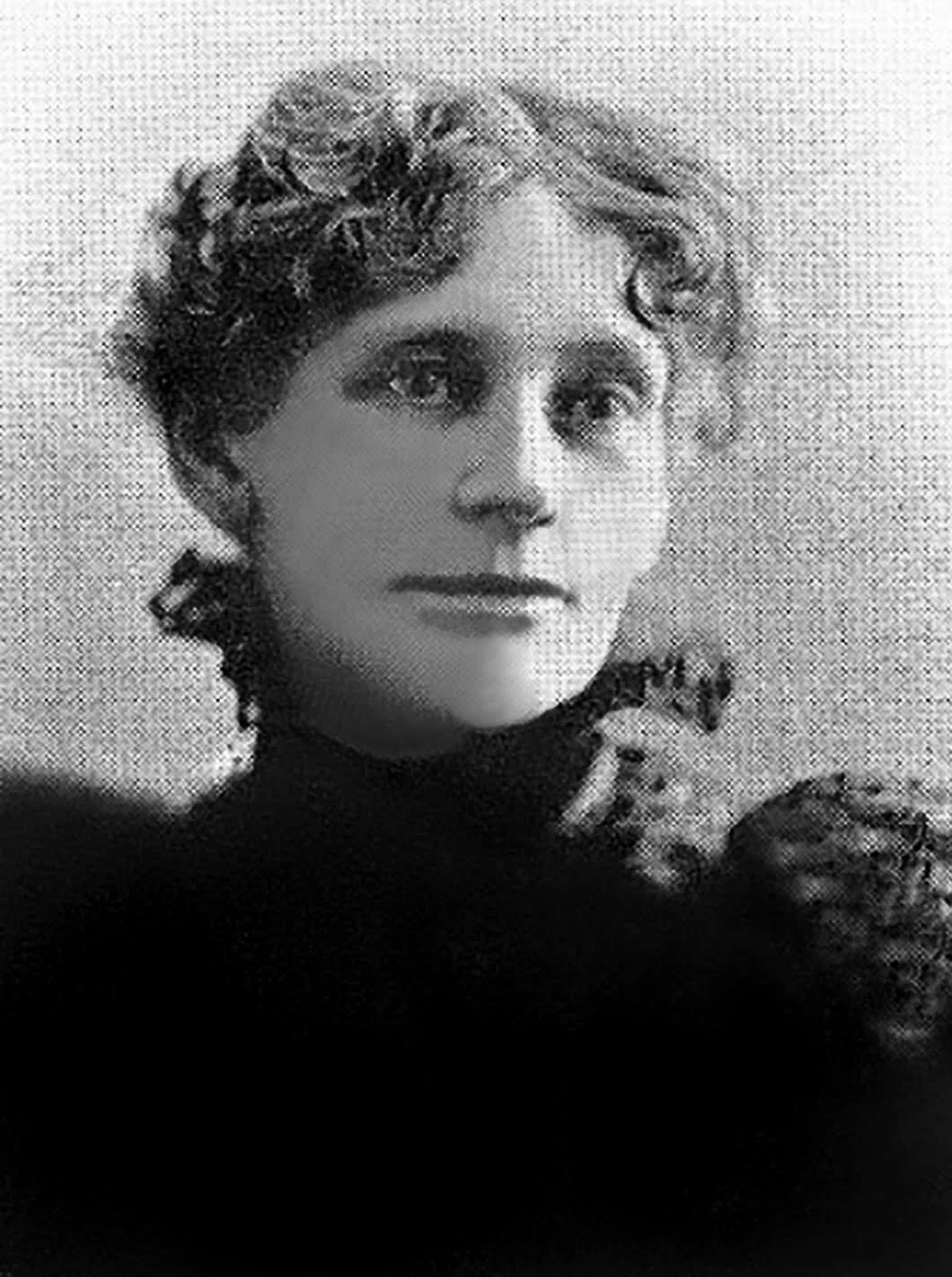
Carrie Westlake Whitney, considered “Kansas City’s First Librarian,” started at the Kansas City Public Library in 1881. Photo courtesy of the Missouri Valley Special Collections, Kansas City Public Library.
Women are stronger, more enlightened, have greater integrity, and are more focused on the needs of those less fortunate. In Forest Hill Calvary Cemetery alone you will learn more about (Kansas City Call editor and reporter) Lucile Bluford; (philanthropist) Adele Hall, (African-American educator) Corinthian Nutter, (Warrensburg, Mo. newspaper editor and publisher) Avis Green Tucker, (Missouri Repertory Theatre founder) Patricia Ann McIlrath, (Local Investment Commission commissioner Mary Kay McPhee; (initial Kansas City Public Library librarian) Carrie Westlake Whitney and (painter and philanthropist) Margot Peet.
It doesn’t get any better than this group of women.
Observation Number Two: Diversity is a good thing. When Forest Hill first opened back in the 1880s, one of its first rules was “Burials are reserved for members of the white race only.” Hogwash.
Fortunately, for each of us, I believe Forest Hill Calvary is now the most integrated cemetery in the city. The bonus is that all of the neighbors within the cemetery get along just fine.
I can assure you that Adele Hall and Mary Kay McPhee are enjoying a neighborhood that includes Buck O’Neil and Lucile Bluford.

Brian Burnes