
Two Buildings, One Hidden Hand
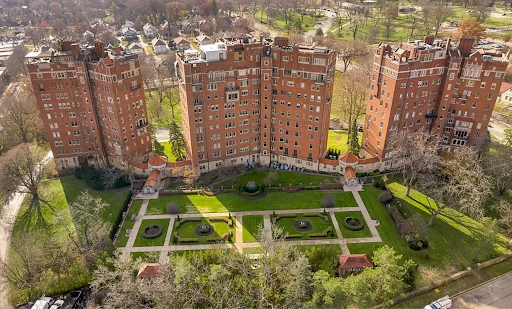
The Walnuts, 2026. Photo courtesy of The Walnuts Archives.
By Dr. Stan Shaffer
Two Buildings, One Hidden Hand
At 11th and Oak Streets in downtown Kansas City, a grand portico and elegant marble lobby still hint at the grandeur of the original Telephone Building. A few miles south, near the Country Club Plaza, three stately Tudor towers rise above formal gardens and ancient walnut trees. These are The Walnuts, once the most exclusive apartment residences in the city
At first glance, the two landmarks seem to belong to entirely different worlds—one was a monument to early telecommunications, the other was a crown for the City Beautiful movement. Yet both share a surprising and largely forgotten connection: a single man who kept his headquarters on the top floor of the Telephone Building and who lived on the top floor of The Walnuts. His name was Theodore Gary—and if you’ve never heard of him, that was exactly as he intended.
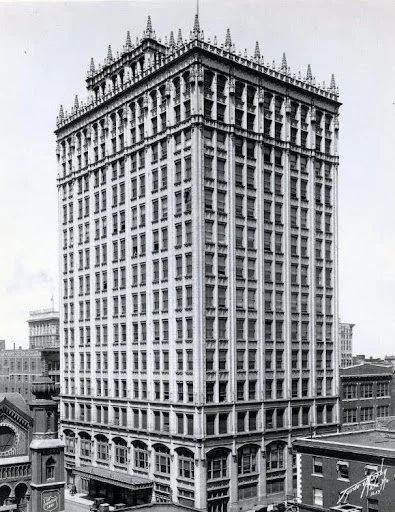
The Telephone Building (1920) by Hoit, Price, and Barnes. Photo courtesy of the Jackson County Historical Society.
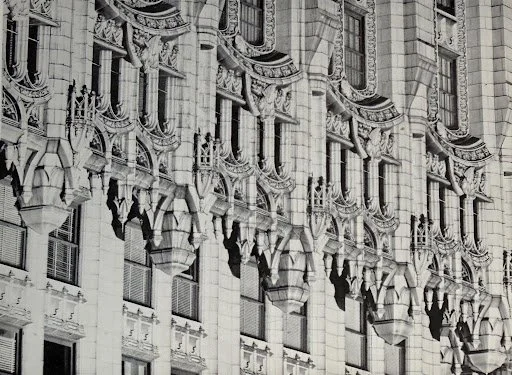
The Telephone Building was intentionally built to be a civic landmark, celebrating Kansas City’s emergence as a major telecommunications center. The building’s elaborate Gothic Revival detailing included a complex array of tracery, spandrels, and corbels. It was one of the most visually striking buildings in the city’s skyline. Photo courtesy of the State Historical Society of Missouri.
The Telephone Building: A House Divided
Ground was broken for the Telephone Building in 1917, but World War I delayed its completion until May 1920. Designed and constructed by the local firm Hoit, Price, and Barnes, the 14-story structure symbolized Kansas City’s rising prominence in the rapidly expanding telephone industry.
The building quickly became the physical center of a fierce local “telephone war.” In the early 1920s, Kansas City supported two rival systems of roughly equal size—Bell Telephone (soon to become Southwestern Bell) and the independent Home Telephone Company—each with about 20,000 subscribers, its own poles, switchboards, and management. Many businesses kept two phones on their desks, one for each network. Remarkably, both companies had offices in the same building. Theodore Gary, the driving force behind the independent network, maintained his headquarters on the top 14th floor – literally operating from the same address as his chief rival.
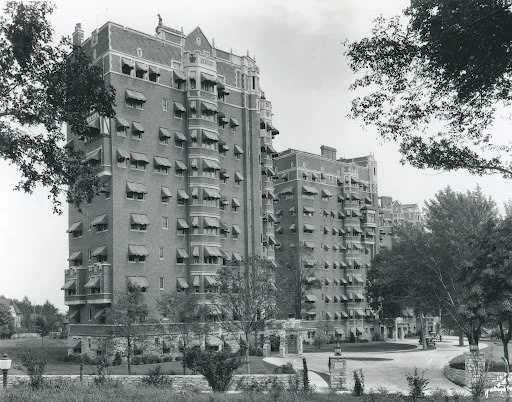
The Walnuts (1929) by Boillot and Lauck. Photo courtesy of the Jackson County Historical Society.
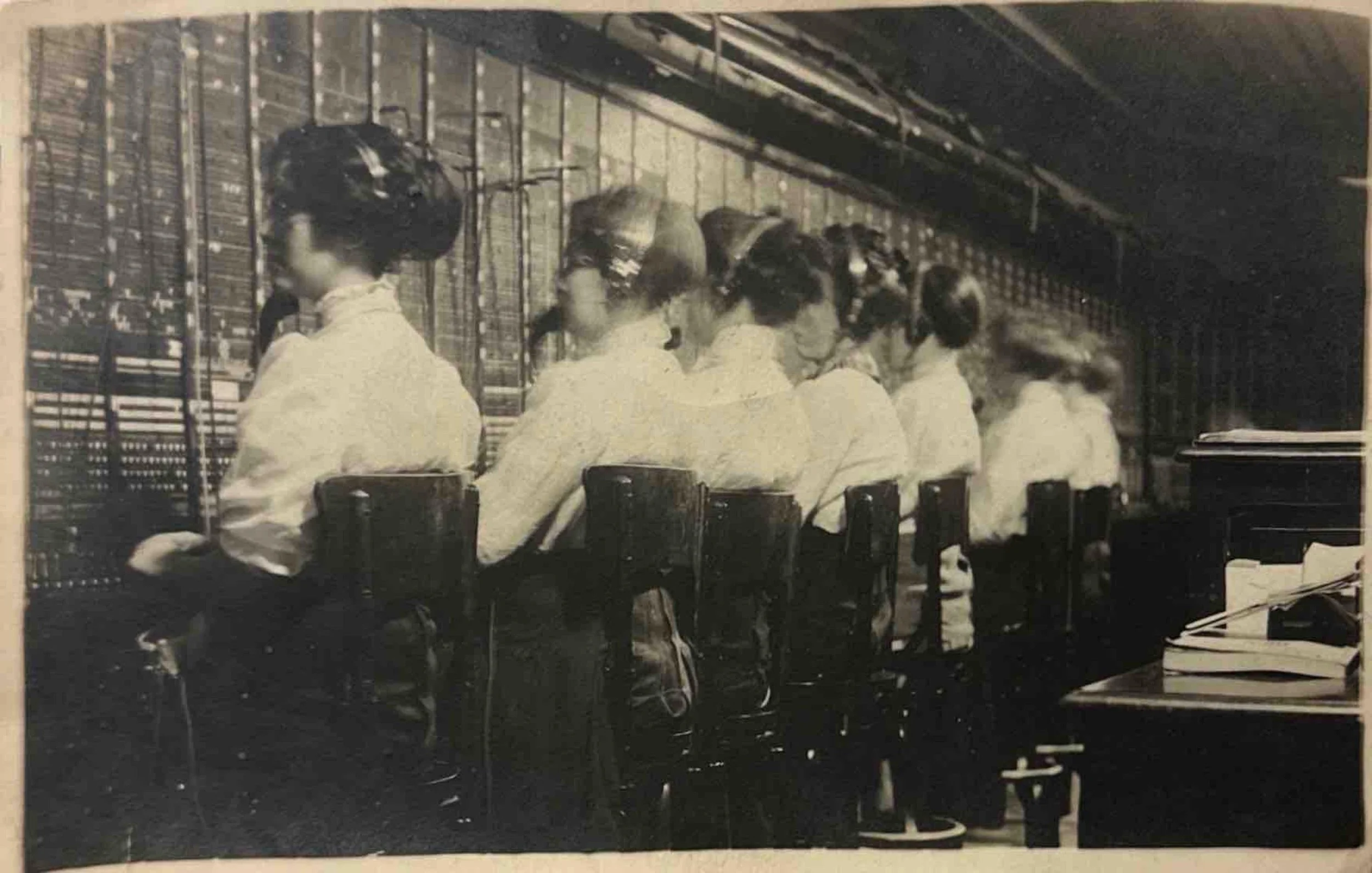
Scores of telephone operators worked at the Telephone Building, some were employed by the Home Telephone Company and some by Bell Telephone. Photo courtesy of the Jackson County Historical Society.
By the late 1920s, explosive growth demanded more space. Remarkably, the expansion was upward. Using an innovative step-back design and Haydite, a lightweight concrete invented in Kansas City, the architects creatively doubled the building’s height to 28 stories. For a time, it was the tallest building in Missouri. Architecture again expressed a message. The building was called an expression of faith in the future of Greater Kansas City.
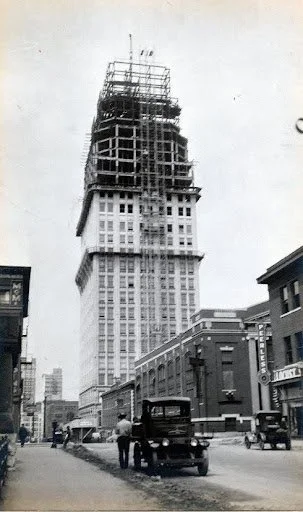
Kansas City watched in amazement as one of its favorite and most beautiful buildings doubled in height. It was a symbol of progress, modernity, and success. Photo courtesy of the Jackson County Historical Society.
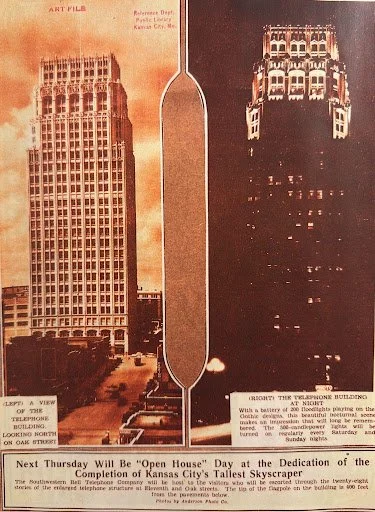
Announcement for the dedication of “Kansas City’s Tallest Skyscraper”. Photo courtesy of the Missouri Valley Special Collections, Kansas City Public Library.
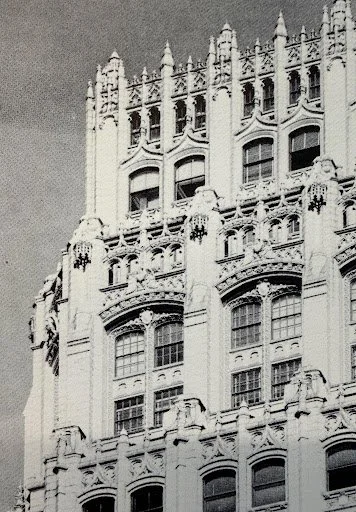
The architects matched the new upper floors to the original Gothic Revival style. The windows were framed with intricate Gothic tracery and pointed arches. Elaborate spandrel panels were filled with stylized floral, foliate, and geometric patterns. The parapets of the upper towers included decorative corbels, pinnacles, and finials. One of the most distinctive features of the building was its castle-like crown with multiple towers, turrets, and crenellations. These elements gave the structure a romantic, almost cathedral-like silhouette against the sky. Photo courtesy of the State Historical Society of Missouri.
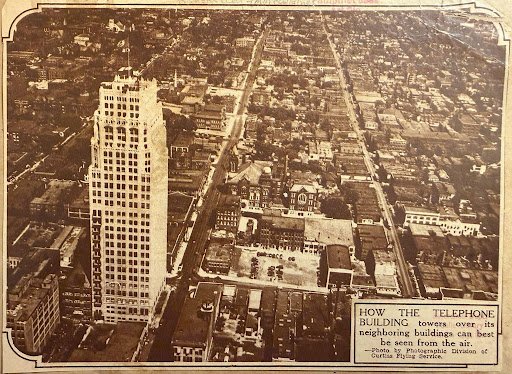
An aerial photograph showing how the enlarged Telephone Building dwarfed its neighbors.
Photo courtesy of the Missouri Valley Special Collections, Kansas City Public Library.
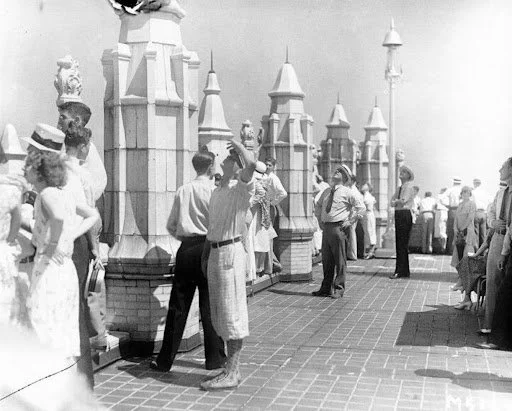
More than 100 people were on the roof of the Telephone Building on August 28, 1929 to view the Graf Zeppelin as it passed over the city. The Zeppelin flew over so close to the top of the building that The KC Star newspaper called it a “handshake.” Photo courtesy of the Missouri Valley Special Collections, Kansas City Public Library.
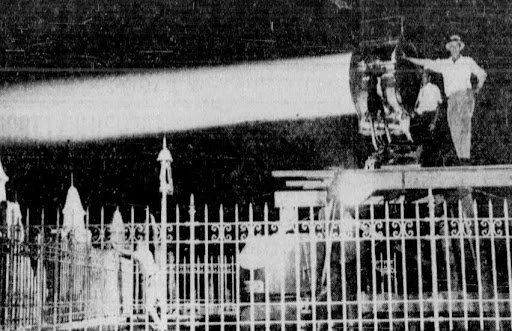
On April 24,1931, an especially bright light was illuminated from the top of the Telephone Building. Kansas City was celebrating its rapid growth and commercial progress during the early 20th century. The light was called “The Jubilee Beacon.” The beam of light could be seen in Topeka, Kansas, 75 miles away. Motorists complained of being distracted. Photo courtesy of The Kansas City Star.

The Walnuts: Luxury Despite Hard Times
In 1929, as the Telephone Building reached its full 28-story height, another landmark was rising on a hill just south of the Country Club Plaza. The Walnuts—three linked Tudor towers on 10 acres of lawns and formal gardens—promised a level of luxury Kansas City had never seen. Each apartment would occupy an entire floor, or perhaps two. The complex was planned with a private restaurant, ballroom, billiards room, cigar lounge, and ladies’ parlors. The planned central hallway would be the longest in the city, and a separate fireproof garage, hidden beneath a formal garden, would include a service station and chauffeurs’ lounge. There would be quarters for maids and passageways designed to keep servants nearby, but out of sight. The Walnuts would have the latest modern conveniences, including a state-of-the-art internal telephone system. It would be needed for residents to order room service.
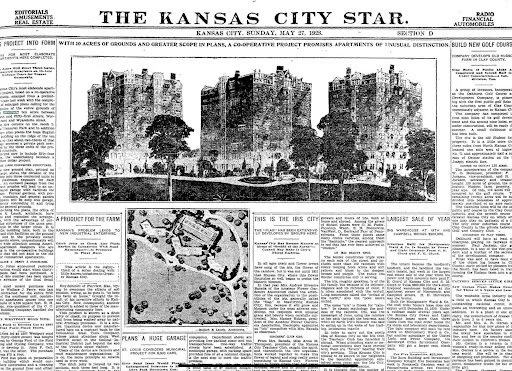
The Kansas City Star covered the excitement of the building of The Walnuts. Stories included dreamy conceptual drawings, photographs of steel skeletons rising above the trees, and descriptions of Mrs. Jacob Loose donning a construction hat and ascending a construction elevator to inspect the progress on her 8,000 square-foot apartment. Photo courtesy of The Kansas City Star.
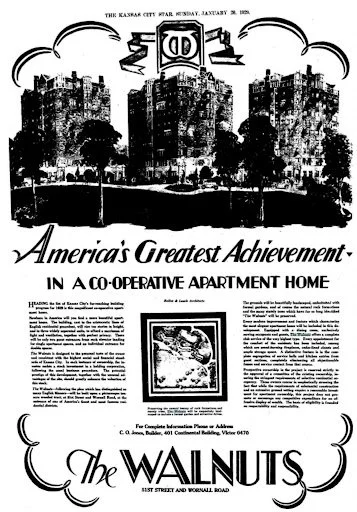
Early advertisements boasted that The Walnuts, “would rank with the most distinguished in America in character, design, and luxuriousness of appointments.” But the ads abruptly halted when Theodore Gary took over the project. Theodore Gary filled the residences by invitation. Photo courtesy of The Kansas City Star.
The project was ambitious. Too ambitious, as it turned out. When the Roaring Twenties abruptly ended in the Great Depression, the builder went bankrupt. The Walnuts nearly became an albatross, a vacant symbol of changing economic times. Then one man stepped in, quietly bailed out the project, bought out the other owners, and turned The Walnuts into a private residential club. His model was the grand apartment-hotels in New York and Chicago, with services like his members-only club in London.
The man with the ambitious plan was Theodore Gary. In spite of the challenging economic times, Gary completed the elegant building and grounds. He built a staff to provide world-class services. And he curated a discerning set of residents to join him at The Walnuts. For the next 20 years, Gary ran The Walnuts from his two-story penthouse in the west tower. But he kept his name out of the news.
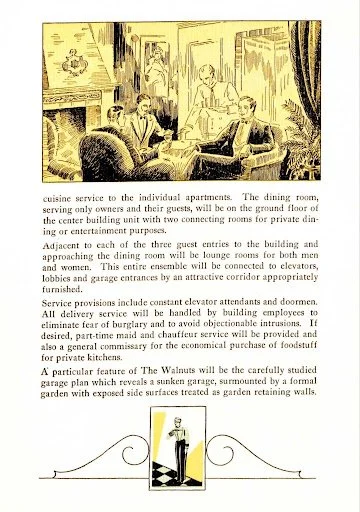
Amenities at The Walnuts included home-like features like “wood burning fireplaces; charming boudoirs and dressing rooms; walnut wood trimmings; and dainty powder rooms en suite.” Plus, there would be concealed radiant heating; abundant storage space; including cedar closets; water softeners; and model kitchen and laundry facilities.” Photo courtesy of The Walnuts Archives.
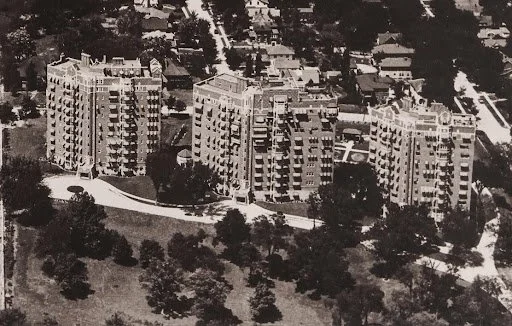
Residents began moving into The Walnuts in October 1929. The stock market crashed on October 29, 1929. Theodore Gary, who lived in the two-story penthouse of the west building (on the left), quietly bought out all of the other owners. His goal was make the project a salute to Kansas City’s rise to success. Photo courtesy of The Walnuts Archives.
The Almost Invisible Theodore Gary
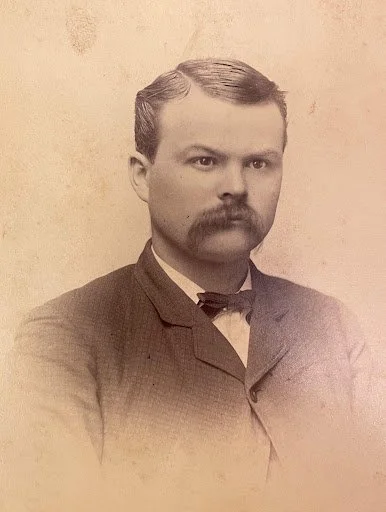
Theodore Gary as a young Missouri businessman. Colleagues described him as, “a living symbol of integrity, industry and courtesy.” Photo courtesy of Macon County Historical Society.
Theodore Gary (1856-1952) lived a classic American rags-to-riches story, told without the usual bravado. He started off as an uneducated laborer working in rural Missouri, and he became one of the wealthiest businessmen in the state. Gary attributed his success to a mistake that he made in his first attempt to better his situation. He accepted a job helping a man sell lightning rods. The commission looked good, and the work was easy. Every farmhouse needed a lightning rod and, if you could catch them on the right day, most farmers were happy to pay cash to have their name added to the order list. All went well until his boss skipped town with all of the deposits. Rather than walk away, Gary spent his entire savings and years of future earnings to personally deliver every lightning rod that had been ordered. The episode left him humiliated but earned him something far more valuable: a reputation for absolute integrity.
That reputation opened doors. When his hometown of Macon, Missouri, decided to organize a small building-and-loan association, the community asked Gary to run it. He taught himself business and finance, then opened his own real estate and insurance agency. He began buying distressed businesses and reorganizing them. His philosophy was to learn everything he could about a business and then improve the services it provided. He became involved in property, farming, mining, and railroads. He was a serial entrepreneur.
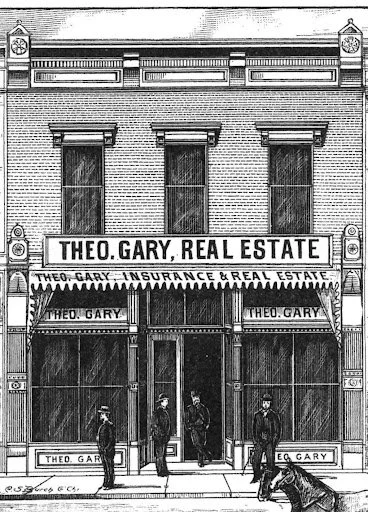
Theodore Gary’s Real Estate and Insurance Company in Macon, Missouri. The illustration appeared in a book by Theodore Gary that boasted the beauty and benefits of Macon County Missouri. He hoped to attract more businesses to the area. Photo courtesy of The Walnuts Archives.
Among his contemporaries, Gary was best known for his humility, modesty, and considerate personality. After first seeing his massive frame, people were pleased to encounter a man with fine manners and a soft-spoken nature. He was always sincere and helpful, whether giving advice or supporting a civic project. A colleague described Theodore Gary as a living symbol of integrity, industry, and courtesy.
Gary’s modesty extended to being humble and self-effacing. He shunned publicity, and he deliberately gave credit to others, even his competitors. He went out of his way to work with competitors whenever it might serve the good of the public. Gary’s last step in completing any deal was to say, “Would you rather be in my chair or your chair in this deal?” If it wasn’t a good deal for both of them, then it wasn’t a deal worth doing.
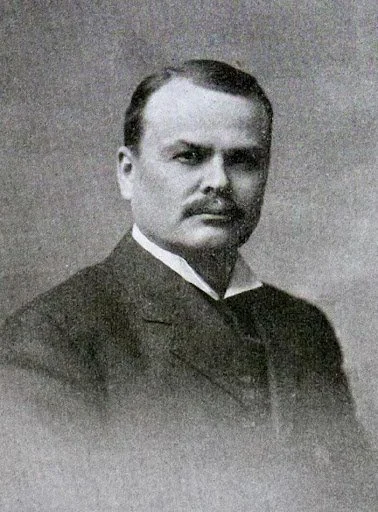
Theodore Gary at age 40. He was now called “Mr. Gary” by even his closest colleagues. Photo courtesy of Macon County Historical Society.
When he turned 40 in 1896, Theodore Gary considered himself a successful man. He governed his life by a personal code of ethics set early in his youth. He had entered into more than 40 businesses and was pleased that he had learned something from each experience. He had not acquired significant wealth, but he and his family were more than comfortable. The Gary family could afford a nice house in the center of Macon. And “Mr. Gary,” as he was now called by everyone, had earned the respect of his community. Gary considered this to be his wealth.
Then, in 1897, a “lucky” thing happened. At least it was lucky in Gary’s self-effacing assessment of the opportunity and the outcome. Macon’s local telephone exchange came up for sale. Like many rural telephone companies, the company’s service was poor, and the telephone company was unpopular. Gary did his homework and concluded that he could at least improve the telephone service for his hometown. He bought the struggling telephone exchange for $7,000.
While doing his usual research, Gary learned that the patents on long-distance telephone service would soon be expiring. Presently, only the Bell company could connect a long-distance call. But that could soon change. After fixing the issues of poor service at the Macon telephone exchange, Gary acquired the telephone exchanges at Columbia, Independence, St. Joseph, Nevada, Carthage, Atchison, and Topeka. He networked them all together. Gary also started installing a telephone in any home that did not yet have one. It was entirely free for a year. If they liked it, they could begin paying a monthly fee. Almost everyone liked it.
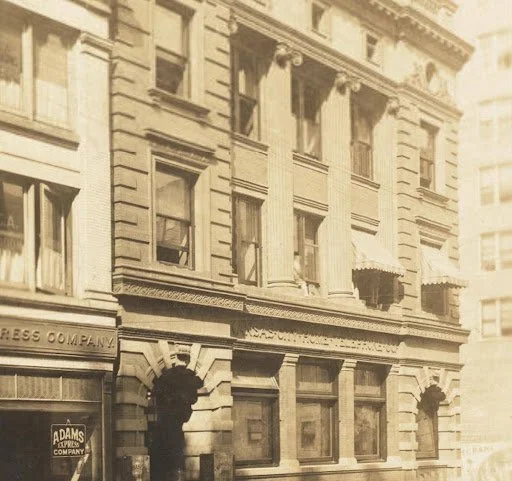
The Kansas City Home Telephone Building was Theodore Gary’s headquarters before the Telephone Building opened at 11th and Oak, 1909. Photo courtesy of the Missouri Valley Special Collections, Kansas City Public Library.
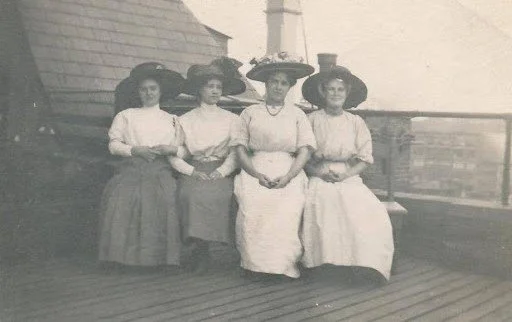
Switchboard operators on the roof of the Kansas City Home Telephone Company. Photo courtesy of the Jackson County Historical Society.
Gary’s acquisitions continued, and his network expanded. He purchased Kansas City’s large independent telephone company, the Home Telephone Company. Over the next two decades, Theodore Gary & Company continued to expand and became the largest independent telephone network in the United States. They also built networks throughout Europe, the Caribbean, Latin America, and the Philippines.
A second “lucky” break came when Theodore Gary purchased the patents for an underused device called an “automatic telephone.” The automatic telephone had a switch, eventually operated with a dial. Gary saw that these dial telephones could potentially replace the need for switchboard operators. A strike by the switchboard operators in New York gave Gary the chance to sell dial telephones on a large scale to his competitor, the Bell system. Gary acquired a manufacturing plant in Chicago and within a few years was supplying 80 percent of the world’s dial telephones and telephone equipment.
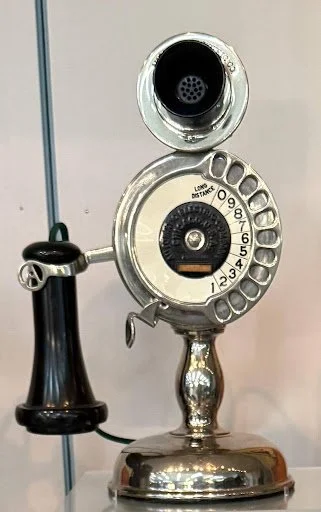
A dial telephone made by Theodore Gary’s Automatic Electric Company. Photo courtesy of The Walnuts Archives.
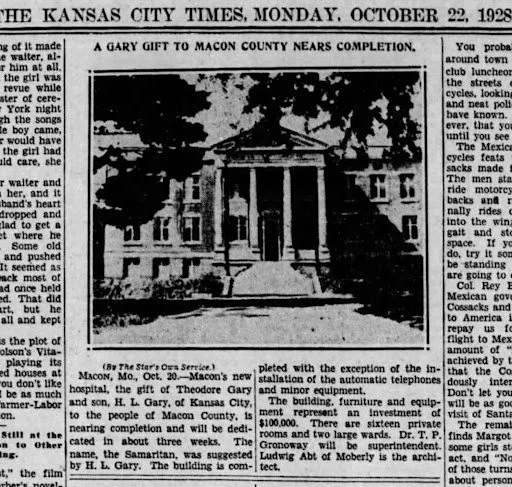
Announcement of Gary’s gift of a charity hospital for Macon, Missouri. Photo courtesy of The Kansas City Times.
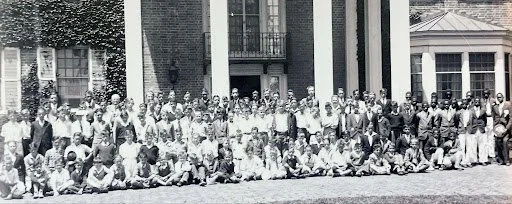
Gary founded a racially integrated Junior Citizens Club, where boys and girls of all backgrounds learned about government and civic responsibility. The photo is taken at the Gary estate, Oakhill, on Lake Macon in Macon, Missouri. Photo courtesy of the Macon County Historical Society.
By the late 1920s, Theodore Gary was recognized nationally as a pioneer of the telecommunications industry. His multinational conglomerate, Theodore Gary & Company, generated revenues of more than $150 million a year.
As Gary’s business empire blossomed, so did his philanthropy. For his hometown of Macon, he built the town’s first public library and endowed it so it would remain free forever. He founded Macon’s Good Samaritan Hospital and provided it with an endowment so that it would be a charity facility open to all. He created Lake Macon and purchased the surrounding land to protect it from pollution. He expanded the county fairgrounds and refurbished the community’s cemetery. On a smaller but personal scale, Gary gave dining room tables to the poorest families in town, who were usually Black, remarking that “no family should be without a table to come together as a family.” It is no surprise that Macon considered Theodore Gary as its “Citizen No. 1.”
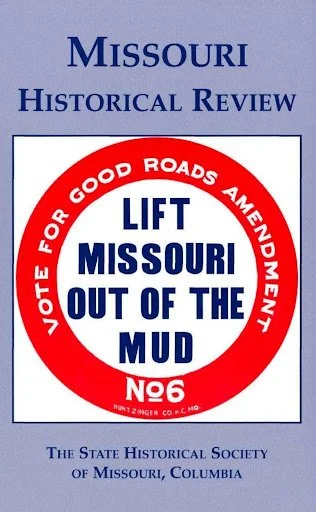
A Missouri amendment for roads was seen by many to be an opportunity for politicians to line their pockets. The governor asked Theodore Gary to manage the project. After paving Missouri’s highways, Gary returned unspent funding and is credited with lifting Missouri out of the mud. Photo courtesy of the State Historical Society of Missouri.
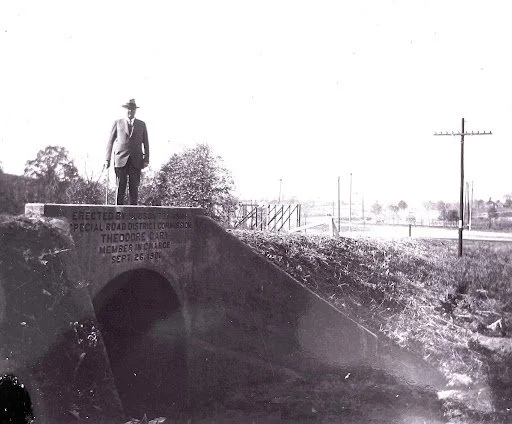
Theodore Gary standing on a new highway bridge that bears his name. Not surprisingly, many telephone poles appear in the photograph. Photo courtesy of the Macon County Historical Society.
Theodore Gary's generosity extended to the state level. At the request of the governor, Gary organized and oversaw the creation of Missouri’s modern highway system. Following his usual practice of first learning all that he could about a business, he hired a highway engineer at his own expense and traveled to Europe. They crossed Europe comparing road-building practices. Gary gave a full year of his time and more than $100,000 of his own money to plan the Missouri project. Gary’s goal was to provide every county in the state with at least one paved highway going north-south and one going east-west. Once the highways were completed, Gary founded the State of Missouri Highway Patrol. He was worried about the safety of motorists using the new paved highways. The newspapers hailed the highway project, saying that Gary successfully “lifted Missouri out of the mud.” The quote was literally true. It also meant that the honest, efficient Mr. Gary had removed the state project from corrupt political hands.
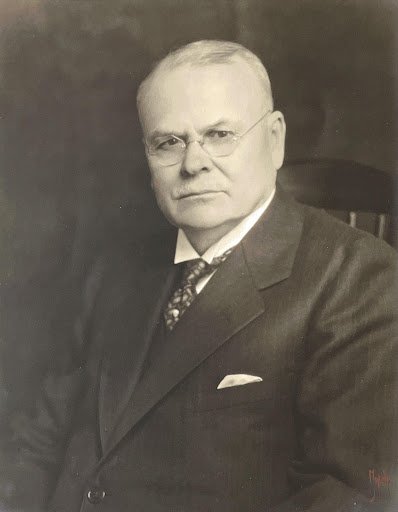
Theodore Gary, circa 1930. Macon, Missouri called him their “Citizen #1.” His generosity was even larger, but more hidden in Kansas City. Photo courtesy of the Macon County Historical Society.
In Kansas City, Theodore Gary’s accomplishments also reflect civic pride over personal pride. He was successful internationally, yet he insisted on keeping his business headquarters in Kansas City. The building holding his headquarters could have been called the “Gary Building.” Instead, he allowed his competitors to call it the “Southwestern Bell Telephone Building.” Gary’s goal was to supply good telephone service, not to have his name attached to things. The same applied to The Walnuts. Gary conceived, built, and directed Kansas City’s most unique residential towers, but all public statements came from the anonymous executive committee. Gary was pleased that The Walnuts made the city proud and preserved green space in the city.
Theodore Gary’s philanthropy was not about writing checks, which he certainly did when money was needed. Rather, the best description of Theodore Gary’s philanthropy comes from the code of ethics that he wrote for himself as a young man and that he frequently repeated to his Young Citizens Club: “Do something for your country. Do something for your city. And do something for the local community where you live.”
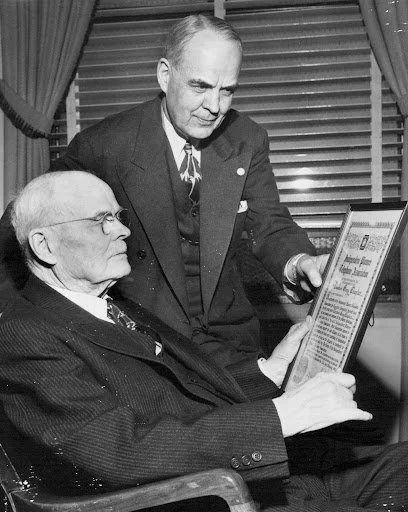
Theodore Gary and his son Hunter Gary at the Telephone Building, circa 1945. Photo courtesy of The Kansas City Star Photo Archives.
Hidden Connections
Once Theodore Gary’s role is understood, the loose ends of both buildings suddenly make sense. Why did bitter telephone rivals share the same headquarters? Because Gary believed in practical cooperation. Why was a spectacular luxury apartment complex built on the eve of the Depression and then rescued when others failed? Because Gary had both the resources and the civic vision to see the project through. Why do the beginnings of both buildings feel slightly mysterious in traditional histories? Because the man who quietly directed them preferred results over recognition.
Theodore Gary never sought the spotlight. He simply built things that served his community. Neither the Telephone Building nor The Walnuts bear his name, and few who pass these landmarks realize they were both shaped by the same almost-forgotten hand. Sometimes the most revealing figures in a city’s history are the ones who worked hardest to stay hidden.
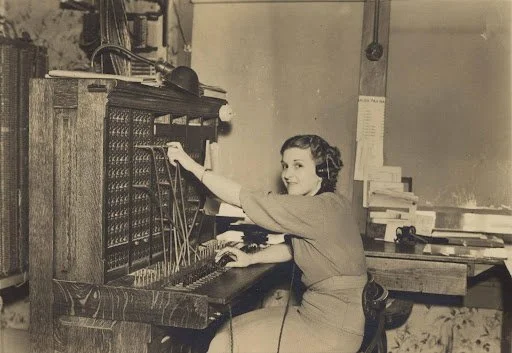
A small-town switchboard operator. Photo courtesy of The Walnuts Archives.
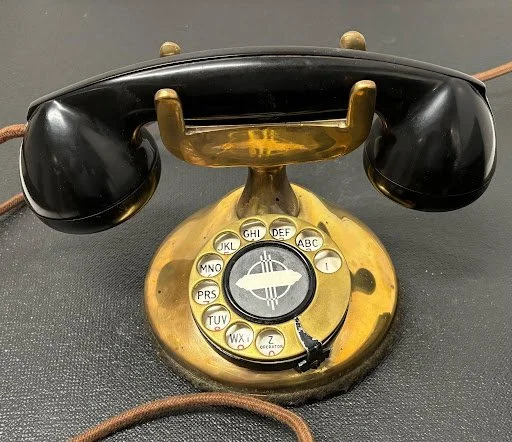
A dial telephone manufactured by the Automatic Electric Company of Theodore Gary & Company. Photo courtesy of The Walnuts Archives.
Postscript
Following Theodore Gary’s death in 1952, his telephone companies were acquired by the General Telephone Company, which later became GTE and then part of Verizon. Gary’s Automatic Electric Company reached its peak in the 1950s. Eight thousand employees worked at its manufacturing plant in Chicago. Through several mergers and acquisitions, the company became part of Lucent Technologies and then AT&T.
The Telephone Building, originally the home to teams of switchboard operators and then Gary’s automatic switching machines, became a fiber cable center in the 1970s. At about the same time, the building was wrapped in an envelope of smooth stucco, entirely hiding its ornate Gothic facade. Today, the building houses a data center. So the former home of the telephone operators now serves artificial intelligence.
The Walnuts became a landmark both geographically and socially. The three towers surrounded by lawns and gardens were immediately a crown jewel for the city’s Country Club Plaza and Country Club District projects. In their first decades, they were the city’s most fashionable address. The name was so well known that mail did not require a street address; “The Walnuts, Kansas City” was sufficient for the postal service. By their 50-year anniversary, they dubbed “the Grand Dame of Kansas City apartments.” Kansas City Star journalist Brian Burnes called The Walnuts “Kansas City’s royal address.”
Theodore Gary curated and invited the early residents of The Walnuts. Many business and civic leaders sold their mansions and moved to The Walnuts. The University of Chicago sociologist Richard Coleman wrote that “when The Walnuts opened, Kansas City’s center of gravity shifted.” Over the next decades, family names at The Walnuts have included Peet, Loose, Spencer, Kemper, Hall, and Bixby. And guests have included Earnest Hemingway, the Prince of Wales, President and Mrs. Reagan, and the Prince and Princess of Thailand.
The Walnuts have provided a unique setting for both private and public events. They were a showcase for Kansas City during the 1976 Republican National Convention. Some 250 guests ascended to the two-story Walnuts penthouse apartment of Charles Price, chairman of Price Candy Company and later Ambassador to the Court of St. James, and his wife, Carol Swanson Price, a member of the Swanson food family. It took four months for Mrs. Price to plan the gala, according to Elsye W. Allison, the Kansas City Star’s society editor. “Guests said they had never seen anything to equal her party in connection with a national political convention,” Allison wrote, “and columnists of most leading newspapers are calling it the party of the year.” The guest list, according to Allison, “included upper-echelon editors and publishers of the nation’s leading newspapers, widely known columnists and communicators, heads of the three television networks and top drawer Kansas City society.” Missouri Gov. Christopher “Kit” Bond and his wife, Carolyn Reid Bond, in whose honor the party was presented, needed to stand for three hours to greet all the guests. “The floral arrangements were stunning,” Allison continued. “In the foyer was a six-foot-high orchid plant and in the center of the reception area was a gigantic arrangement of wild tiger lilies, orchids and green pampas grass spilled from a green ginger vase.” Guests included (CBS News correspondent) Mike Wallace, (New York Times political writer) Tom Wicker and (Washington Post) publisher Katharine Graham.
The Telephone Building and The Walnuts now approach their Centennial milestone. Their stories will continue to unfold. If history is any guide, there are already hidden hands at work.
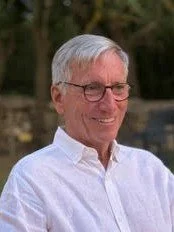
Dr. Stan Shaffer is a retired physician and a current volunteer in the archives of the Jackson County Historical Society. He finds that the society’s extensive photography collection is an inspiration for historical research. Photographs often lead down unexpected paths. His recent book about The Walnuts, a Kansas City landmark residence with a little known history, is the result of such a journey.